


What Are Heating Pads and How Do They Work?
-
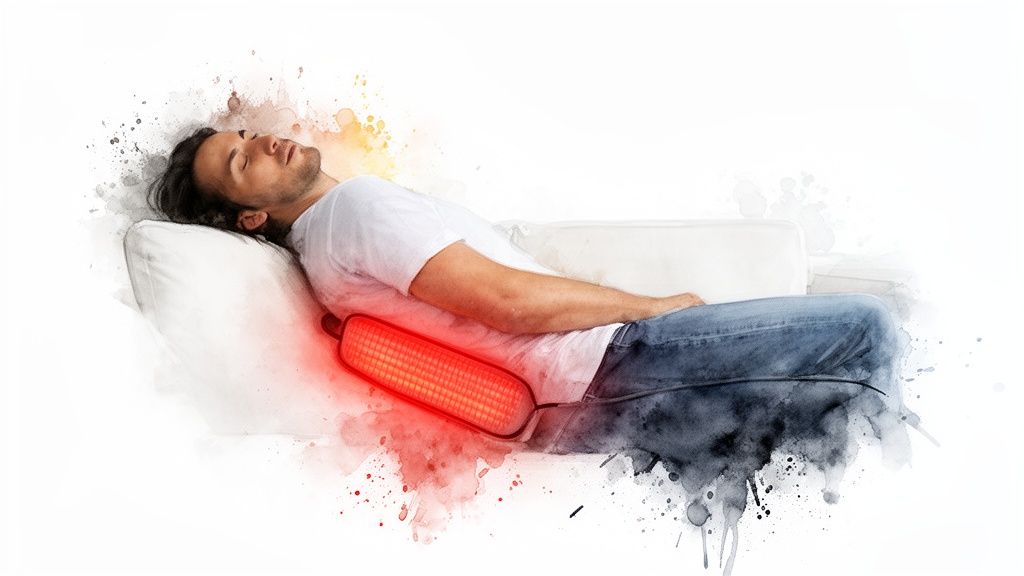
At its most basic, a heating pad is your personal, on-demand tool for something called heat therapy. It’s like a portable, reusable warm compress you can apply just about anywhere on your body to soothe aches, pains, and stiffness. It’s all about providing targeted, drug-free comfort right where you need it, when you need it—a cornerstone of both at-home recovery and professional massage therapy.
Your Simple Answer to What Are Heating Pads
So, how does a simple pad create such profound relief? It all comes down to circulation. When you apply a heating pad, the warmth encourages your blood vessels to open up—a process known as vasodilation.
Imagine your commute is snarled in traffic. Vasodilation is like opening up three new lanes on the highway. This allows more blood, oxygen, and nutrients to flow freely to the sore area. This influx helps tired or injured muscles relax, repair themselves, and heal more efficiently. It’s a wonderfully simple, natural solution for everything from a cricked neck after a long workday to easing menstrual cramps or calming the ache of chronic arthritis.
Why Heat Therapy Works So Well
The magic of a heating pad isn't just in what it does, but also in how it feels. The warmth actually runs interference on your body's pain signals. It stimulates sensory receptors in your skin, which helps block those pain messages from reaching your brain. This creates that comforting, soothing sensation that eases discomfort and helps your entire body relax.
Ever felt that knot in your lower back after a day of yard work? Applying a heating pad for just 15-20 minutes can work wonders. The heat sinks deep into the muscle tissue, melting away the tension and helping you move more freely. This simple action can transform your evening from one of stiff discomfort to one of relaxed mobility. If you're curious to learn more, you can dive into the basics of heat therapy in our detailed guide.
A heating pad doesn't just feel good—it actively helps your body's natural healing process. By improving circulation and relaxing muscles, it offers a safe and effective way to manage pain without reaching for a pill bottle.
Not all heating pads are created equal, though. Each type offers something a little different, depending on your needs.
Heating Pad Types at a Glance
To help you figure out which one might be right for you, here’s a quick breakdown of the most common options available.
| Type | Power Source | Typical Heat Duration | Best For |
|---|---|---|---|
| Electric | Wall Outlet | 1-2 hours (often with auto-shutoff) | Consistent, adjustable heat for relaxing at home. |
| Microwavable | Microwave | 20-30 minutes | Portable, moist heat combined with gentle, soothing pressure. |
| Chemical/Disposable | Chemical Reaction | Up to 8 hours | On-the-go, single-use relief perfect for travel or long days out. |
Each of these has its own place, whether you need steady, long-lasting warmth on the couch or a quick, portable fix while you're on the move.
Exploring the Different Types of Heating Pads
Choosing a heating pad is a bit like picking the right tool for a job—the best one depends entirely on your needs and lifestyle. Not all pads deliver warmth in the same way, so getting to know the key differences is crucial for finding your perfect match for comfort and relief.
Let's break down the most common types you'll find on the market.
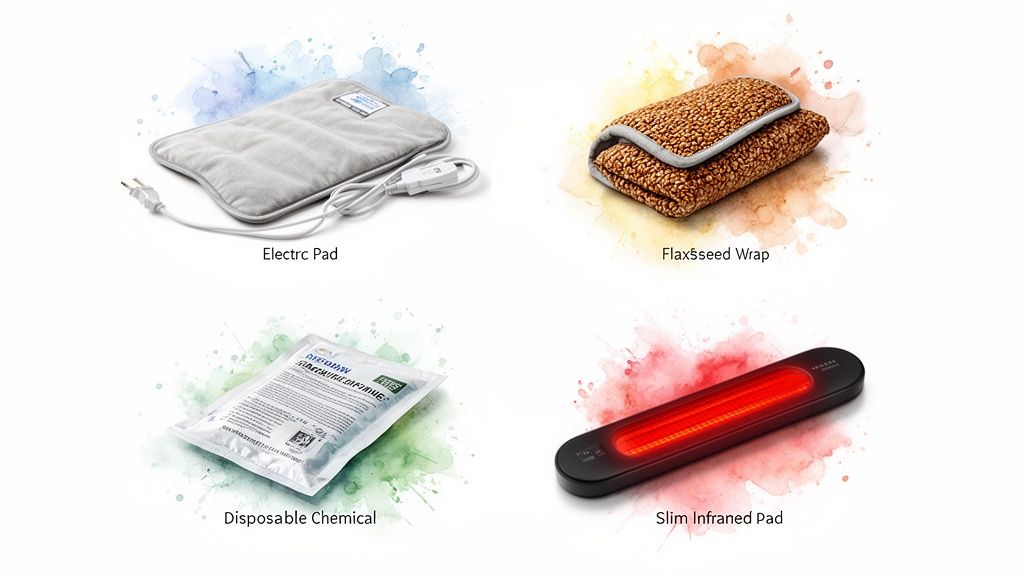
Electric Heating Pads
These are the classic workhorses of heat therapy. You plug them into a wall outlet, and in return, you get consistent, adjustable dry heat for as long as you need it. Most modern versions come with multiple temperature settings and an auto-shutoff feature for safety, which makes them a really reliable choice.
For example, an electric pad is perfect for an evening on the couch when you want sustained warmth for a sore lower back. The only real drawback is the cord, which keeps you tethered to one spot.
Microwavable Heating Pads
If you value portability and a more natural feel, microwavable heating pads are a fantastic option. These pads are typically filled with natural materials like flaxseed or whole wheat. When you heat them, they release a gentle, moist heat, which many people find penetrates muscles more deeply than the dry heat from an electric pad.
They are incredibly convenient. Imagine soothing a stiff neck right at your office desk without being tied down by a power cord—that’s the freedom a microwavable pad provides. A quick minute or two in the microwave is all it takes.
The combination of moist heat and gentle, weighted pressure from the natural fillings creates a unique, spa-like comfort. This is why microwavable pads are a favorite in homes and professional massage therapy clinics alike.
Chemical or Disposable Heat Packs
When you're on the move, chemical heat packs are your best friend. These single-use packs activate through a simple chemical reaction once you open the pouch and expose them to air. They’re slim, often adhesive, and provide hours of consistent, low-level warmth.
Think about a long car ride or a chilly outdoor sporting event. A disposable pack can be applied right under your clothes, offering hours of targeted relief without anyone even knowing it's there. They are the ultimate solution for convenient, on-the-go pain management.
Infrared Heating Pads
Finally, infrared pads represent a more modern approach to heat therapy. Instead of just warming the surface of your skin, they use far-infrared light to generate heat that penetrates much deeper into your muscles and tissues. This makes them highly effective for more intense or chronic pain.
While these pads offer localized therapy, the technology is also used on a larger scale. For instance, the principles are similar to what you'd find in infrared sauna therapy, which uses the same kind of light for whole-body therapeutic warmth.
The Science Behind Why Heat Therapy Feels So Good
Ever wonder why draping a heating pad over a sore muscle brings such an immediate sense of relief? It’s not just in your head. There’s some fascinating science at play, turning that simple warmth into a powerful, non-invasive tool for pain management. This process, known as heat therapy, works in sync with your body’s own systems to soothe aches and kickstart the healing process.
At its most basic level, it’s all about circulation. Imagine your blood vessels are like tiny, flexible highways. When a muscle is tight, injured, or spasming, it creates a traffic jam on these highways, slowing down the delivery of oxygen and nutrients.
Applying warmth from a heating pad is like getting a green light. It signals the vessels to widen—a process called vasodilation. This expansion opens up the lanes, allowing more oxygen-rich blood to rush to the area. This fresh blood flow is critical; it delivers the building blocks for repair and helps flush out the metabolic junk that’s contributing to your pain.
From Tense Muscles to Total Relaxation
That boost in circulation creates a few immediate benefits you can actually feel. It’s the real reason that a little warmth can make such a huge difference for so many common aches and pains.
For example, think about how you feel after hours hunched over a keyboard. The muscles in your neck and shoulders get all knotted up and contracted. Applying a heating pad encourages those muscle fibers to relax and lengthen, literally melting away that awful tension.
This same idea works for other familiar pains, too:
- Menstrual Cramps: Heat helps relax the uterine muscles as they contract, easing the spasms that cause so much discomfort.
- Stiff Joints: For people with conditions like arthritis, warming up joints before moving or stretching can make a world of difference for morning stiffness and overall flexibility.
- Post-Workout Soreness: That increased blood flow helps clear out lactic acid and other exercise byproducts, which can shorten your recovery time.
Blocking Pain Signals at the Source
But there’s more to it than just relaxing muscles. Heat therapy also plays a clever trick on your nervous system. The warmth from the pad stimulates sensory receptors in your skin, which send "comfort" signals straight to your brain.
Here's the cool part: these comfort signals travel along the exact same pathways as your pain signals. Since your brain can only process so much information at once, the pleasant sensation of warmth effectively runs interference, overriding the pain signals. It’s like turning up your favorite music to drown out a distracting noise.
The effectiveness of this simple tool is no secret. The global heating pad market was valued at around $54.13 billion and is expected to climb to $81.21 billion by 2032. This isn't just a trend; it reflects a genuine need. With chronic pain affecting over 20% of adults worldwide, people are looking for safe, effective relief. Research has shown that applying heat can increase local blood flow by 25%, which can reduce injury recovery time by up to 40% compared to just using ice.
Heat therapy is so much more than a cozy feeling. It’s a biological process that calms pain signals, relaxes muscle tissue, and empowers your body’s own healing mechanisms. It’s a simple, effective strategy for managing pain naturally.
Understanding this science helps explain why millions of people rely on heating pads for daily relief. To learn more about putting these principles into practice, take a look at our complete guide on the benefits of heat therapy.
How to Choose the Right Heating Pad for Your Pain
Finding the perfect heating pad isn’t about grabbing the fanciest one off the shelf. It's about finding the right tool for the job. Think of it like buying a good pair of shoes—what works for a marathon runner won't work for a mountain climber. Let’s match the right features to your specific needs so you can make a smart wellness investment.
Ready to find the one? Let's break down the key things to look for.
Consider Your Pain Area and Lifestyle
First things first: where does it hurt, and when do you need relief? The shape, size, and portability of a heating pad make all the difference between temporary relief and a truly effective solution.
-
Size and Shape: A stiff neck and tense shoulders need something different than a sore lower back. A long, contoured wrap that drapes naturally around your neck and shoulders, like SunnyBay's hands-free models, is going to give you much better coverage than a simple square pad. On the other hand, that versatile rectangular pad is perfect for laying across your lower back or abdomen to soothe menstrual cramps.
-
Portability and Use: If you're someone who needs relief while working at your desk or doing chores, a pad with adjustable straps is non-negotiable. Straps keep the pad right where you need it, delivering consistent heat without forcing you to stay put. It's a game-changer for anyone who can't sit still.
This handy flowchart can help you visualize how to connect your needs to the right kind of pad.
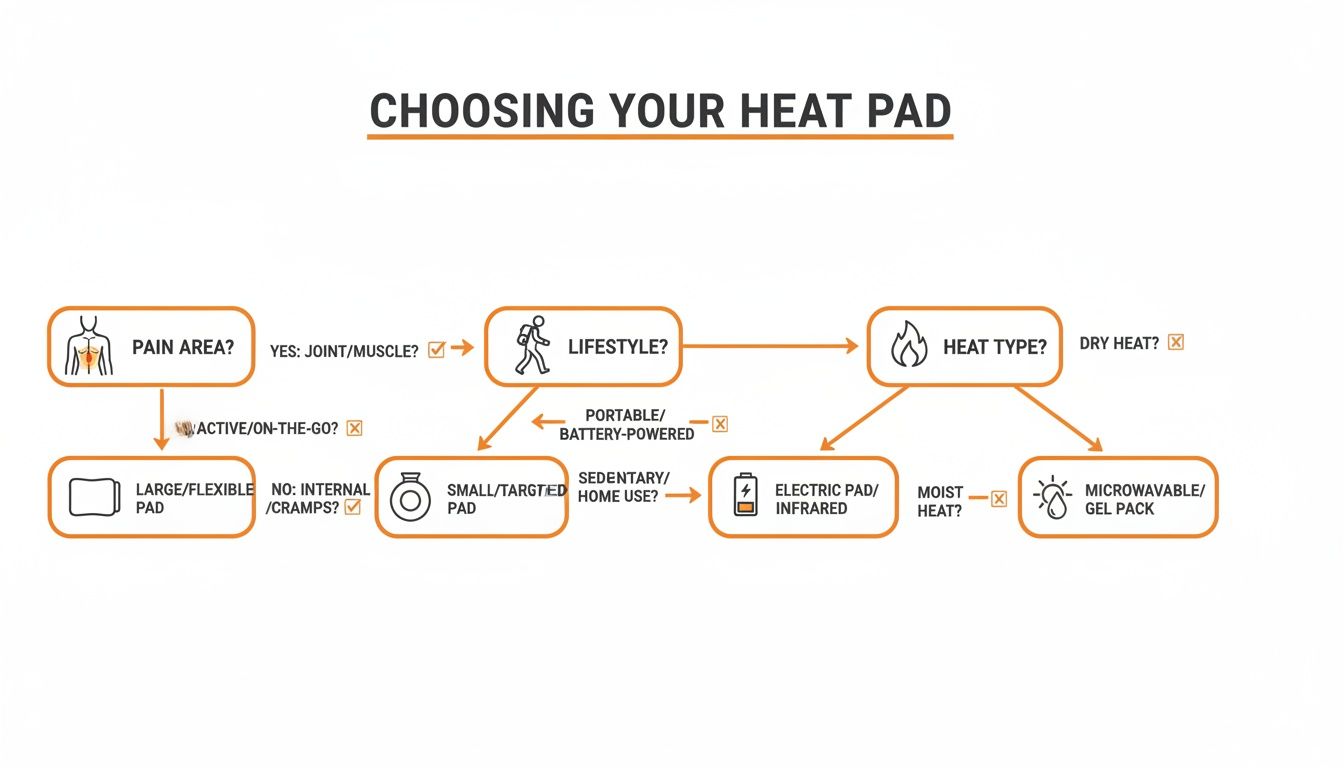
As you can see, for an active person with neck pain, a hands-free, microwavable wrap is the clear winner. It’s all about matching the features to your real life.
Evaluate Material and Special Features
Once you have the right shape in mind, it's time to think about what's on the inside and outside. These details have a huge impact on your comfort and the pad's effectiveness.
The filling material is a big one because it determines the type of heat you get. Many people swear by the moist heat from natural fillers like flaxseed. It feels like it penetrates deeper into the muscle tissue for a more thorough, soothing experience. These fillings also provide a gentle, comforting weight that helps you relax even more.
The way heat works to soothe pain is fascinating, and much of it comes down to its effect on our body's internal processes. To get a better sense of the science, you can learn how to reduce inflammation for better health.
Beyond the filling, keep an eye out for these features:
- Fabric and Cover: You want something that feels good against your skin, like soft fleece or cotton. A removable, washable cover is an absolute must for keeping things hygienic, especially for an item you’ll be using often.
- Aromatherapy: Some microwavable pads come infused with calming herbs like lavender. This adds a lovely layer of relaxation to your heat therapy session, engaging another one of your senses to help you unwind.
The demand for non-invasive pain solutions is booming. The heating pad market is expected to hit $90.79 billion by 2034, largely thanks to an aging global population seeking comfort. While electric pads currently make up 40% of the market because of their precise temperature settings, microwavable pads are gaining ground fast, with a 15% annual growth rate. Their portability makes them a favorite for commuters and anyone dealing with back pain on the go.
Using Your Heating Pad Safely and Effectively
A heating pad can be a fantastic tool for soothing aches and pains, but getting the most out of it means knowing how to use it the right way. While heat therapy is incredibly beneficial, a few simple guidelines will make every session both safe and effective. Think of it as a quick pre-flight check before you take off for Planet Relaxation.
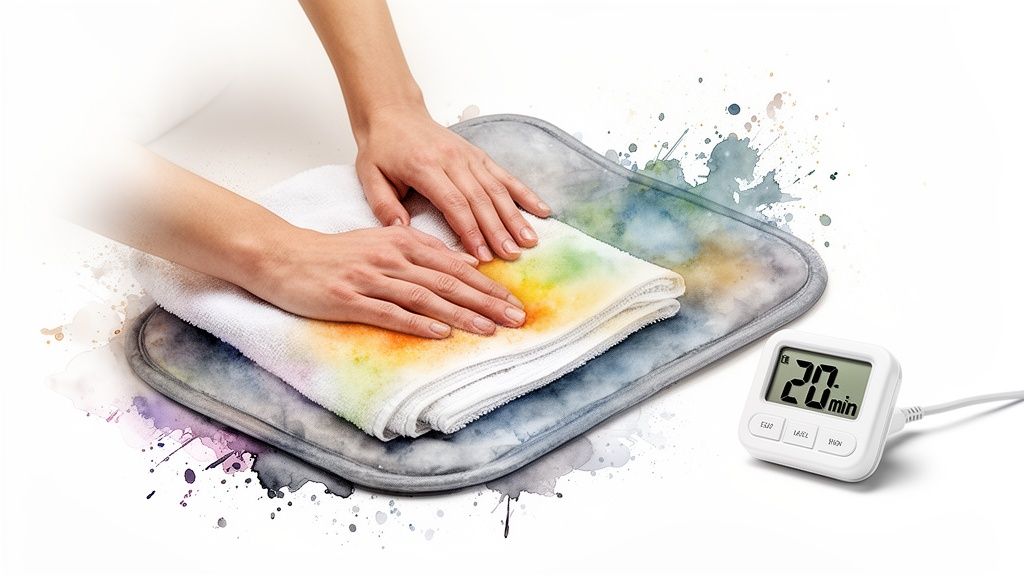
The most important rule? Always create a barrier between the heating pad and your skin. A soft towel or even a layer of clothing prevents direct contact. This is your number one defense against burns or irritation, especially if you plan on settling in for a longer session.
Simple Rules for Safe Relief
To get the most out of your heat therapy without any hiccups, just keep this simple checklist in mind. It's all about building good habits so your path to pain relief is always a secure one.
- Mind the Clock: Keep your heat sessions to about 15-20 minutes at a time. This is the sweet spot—long enough to relax muscles and boost circulation without overwhelming your skin.
- Never Sleep with It On: This is a big one, especially for electric heating pads. It's tempting to drift off, but leaving the heat on all night can lead to serious skin damage. Always turn it off before you get too cozy.
- Check Your Skin: After you’re done, take a quick look at your skin. A little redness is normal, but if it's excessive or doesn't fade, that's a sign to dial back the temperature or shorten your next session.
When to Avoid Using Heat
Knowing how to use a heating pad is only half the battle; knowing when to put it away is just as crucial. Applying heat in the wrong situation can actually make things worse.
For a fresh injury, like a sprained ankle that’s swollen and inflamed, cold therapy is your best friend for the first 48 hours. Heat can increase inflammation in an acute injury, so save your heating pad for the recovery phase when you’re dealing with stiffness and muscle soreness.
You should also steer clear of heat therapy under these conditions:
- On any open wounds, cuts, or sores.
- Over areas where you have numbness or reduced sensation, which can happen with conditions like diabetes. If you can't feel the heat properly, you won't know if it's too hot.
Following these simple do's and don'ts is easy. For an even more detailed breakdown, you can learn more about heating pad safety in our complete guide.
Why Professionals Recommend High-Quality Heat Therapy
Ever wonder what your physical therapist or chiropractor reaches for when they need to prep your muscles for treatment? It’s often a high-quality heating pad. For them, heat therapy isn't just about comfort; it's a critical tool for getting real results. Professionals in fields like massage and physical therapy understand that targeted warmth is a powerful ally in promoting healing and improving mobility.
They know that a few minutes with a good heating pad can be the difference between a stiff, painful session and a productive one. They need products that deliver consistent, reliable heat and are built from durable, clinic-grade materials—which is why they so often turn to trusted brands like SunnyBay.
The Clinical Stamp of Approval
This professional endorsement is a big deal. When you choose a brand that’s been trusted in clinics for years, you’re not just buying a heating pad; you’re bringing a piece of that professional-grade care into your own home. It’s a vote of confidence in the product's safety and effectiveness.
This trust is also driving a massive shift in how we manage pain. The global heating pads market is on track to jump from $61.25 billion to an incredible $87.79 billion by 2030. This isn't just a random trend. It reflects a growing demand for effective home healthcare solutions, especially as millions seek alternatives to medication for chronic pain. Some studies have even shown that using heat therapy can cut healthcare costs in chronic care situations by up to 30%. You can dig deeper into the growth of non-drug pain management to see how it's reshaping wellness worldwide.
Choosing a professionally recommended heating pad means you’re relying on the same principles of heat therapy that experts trust to relax muscles, improve flexibility, and accelerate patient recovery.
Got Questions About Heating Pads? Let's Get Them Answered.
Even after you've got the basics down, a few practical questions always seem to pop up. It's totally normal. Getting clear, simple answers is the best way to feel confident you're using heat therapy safely and getting the most out of it. Let's tackle some of the most common questions we hear all the time.
How Long Is Too Long for a Heating Pad?
A good rule of thumb is to stick to a 15 to 20 minute session. That's usually the sweet spot—long enough for the warmth to get deep into your muscles and boost blood flow, but not so long that it starts to irritate your skin.
If you're dealing with chronic pain, you can absolutely use it a few times a day. Just make sure to give your skin a rest and let it return to its normal temperature between sessions.
Is Moist Heat Better Than Dry Heat?
Ah, the classic debate! Honestly, it often boils down to what feels best for you and the kind of relief you're after.
- Moist Heat: This is the kind you get from microwavable pads. Many people find it penetrates deeper into the muscle tissue, making it a go-to for really stubborn knots and deep aches. The moisture seems to help carry the heat where you need it most.
- Dry Heat: This is what you'll get from a typical electric pad. It provides a consistent, steady warmth that's fantastic for surface-level comfort. Think of it as a wonderful, soothing sensation for general stiffness or just warming up.
Heat or Ice for a New Injury?
This one is crucial. When you've just injured yourself—say, a fresh ankle sprain or a pulled muscle with swelling—always reach for cold first.
Think R.I.C.E. (Rest, Ice, Compression, Elevation). For the first 24 to 48 hours, ice is your best friend. It constricts blood vessels, which helps reduce that initial swelling and numbs the sharp pain. Only after that inflammation has calmed down should you switch over to heat to relax any lingering tightness and encourage healing.
How Do I Keep My Heating Pad Clean?
You're putting this right on your body, so keeping it clean is a big deal. How you wash it really depends on the type of pad you have. You can't just dunk an electric pad in water, and microwavable pads with natural fillings are a no-go for the washer, too.
Your best bet? Look for a pad that comes with a removable, washable cover. It makes life so much easier. You just zip it off, throw it in the laundry, and you're good to go. It’s the simplest way to keep things fresh for your next relief session.
Here at SunnyBay, we keep these practical details top of mind. That’s why our microwavable pads come with easy-to-clean covers. It’s all part of our commitment to creating drug-free relief products trusted by clinics and loved by people at home. Explore our collection today!


