


Natural Remedies for Tension Headaches: Quick, Drug-Free Relief
-
When you're dealing with a tension headache, the natural approach is often about one key thing: relaxing the tight, overworked muscles in your neck and shoulders. That constant, vise-like pain doesn't have to be your norm. Simple, effective methods like applying a warm heat pack, doing a few targeted stretches, and paying attention to your posture can offer incredible, drug-free relief.
What Really Causes That Vise-Grip Headache
That relentless, dull ache wrapping around your head isn’t just some random pain—it’s a clear signal from your body that something is out of balance. A tension headache feels like a vise-grip for a reason. The primary culprits are almost always the muscles in your neck, shoulders, and scalp, which have become uncomfortably, persistently tight.
Think of those muscles like the strings on a guitar. When they're properly tuned, everything feels fine. But when daily habits—like hunching over a screen, clenching your jaw during a stressful meeting, or sleeping in an awkward position—start to overtighten those strings, they begin to vibrate with pain. That pain radiates straight to your head.
Here’s a breakdown of the most common triggers that create this perfect storm of discomfort:
- Persistent Muscle Tension: Chronic tightness in the neck and shoulders is the number one suspect. If this sounds like you, you can learn more about what causes neck and shoulder tension and how to tackle it in our detailed guide.
- Chronic Stress: Mental and emotional stress kick your body into a "fight or flight" mode. This leads to unconscious muscle clenching that slowly but surely builds up over the day.
- Poor Posture: Slouching at your desk or constantly craning your neck to look at your phone puts a continuous, low-grade strain on your entire upper body, which is a direct pathway to headache pain.
Understanding the Source of the Pain
If you're dealing with this, you're far from alone. Tension headaches are a global issue, affecting about 1.6 billion people worldwide. That makes them the second most common neurological disorder out there. Here in the U.S., nearly 80% of adults will get them at some point.
A huge piece of the puzzle is the formation of tight, painful muscle knots, technically called myofascial trigger points. These little knots are a big problem, implicated in up to 70% of tension headache cases.
The image below really brings home how this works, showing the common areas where muscle tension builds up and creates that classic "band-like" headache sensation.
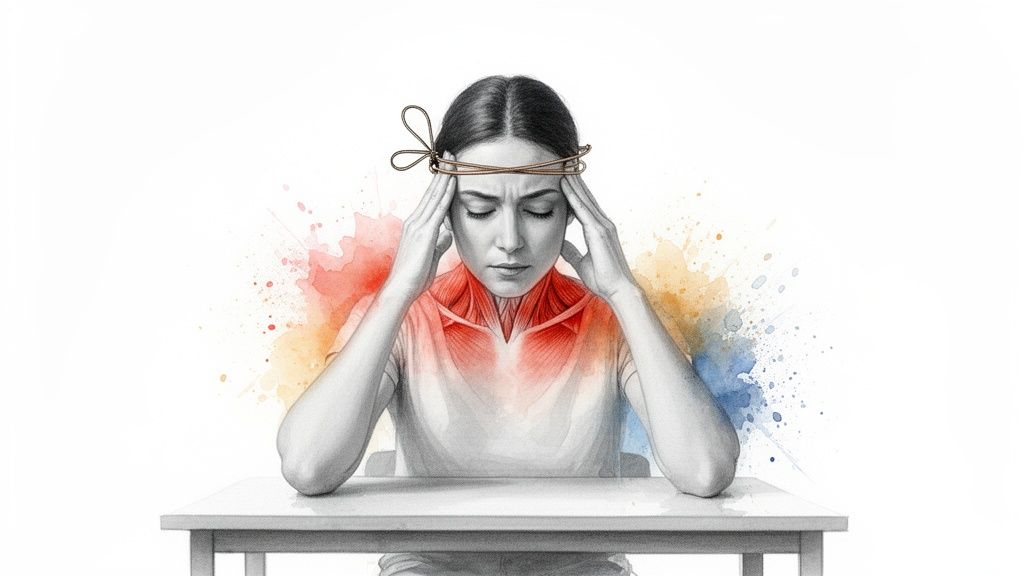
As you can see, pain that starts in the neck and shoulders doesn't stay there. It travels upward, creating that feeling of intense pressure squeezing your entire head. Once you start identifying your personal triggers—whether it's stress, your desk setup, or a mix of things—you can finally begin to take targeted, effective action.
Quick Guide to Headache Triggers and Natural Solutions
To help you connect the dots between your daily habits and that nagging headache, here’s a simple table matching common triggers with the natural remedies that work best for them. Think of it as your personal roadmap to relief.
| Common Trigger | Primary Natural Remedy | How It Helps |
|---|---|---|
| Neck & Shoulder Tension | Heat Therapy | Boosts blood flow to tight muscles, easing stiffness and melting knots. |
| Chronic Daily Stress | Massage & Stretching | Directly releases trigger points and lengthens constricted muscle fibers. |
| Poor Desk Posture | Ergonomic Adjustments | Reduces the constant physical strain that leads to muscle fatigue and pain. |
| Dehydration | Consistent Hydration | Ensures proper muscle function and prevents headaches caused by fluid loss. |
By zeroing in on the root cause, you can choose a remedy that directly addresses the problem instead of just masking the symptoms.
How Heat Therapy Melts Away Those Pesky Muscle Knots
When a tension headache clamps down, that awful vise-grip feeling rarely starts in your head. More often than not, the real culprits are the tight, overworked muscles in your neck and shoulders. One of the best natural ways to fight back is with simple heat therapy. Applying warmth to these areas is like finding the key to unlock those stubborn muscle knots that send pain shooting upwards.
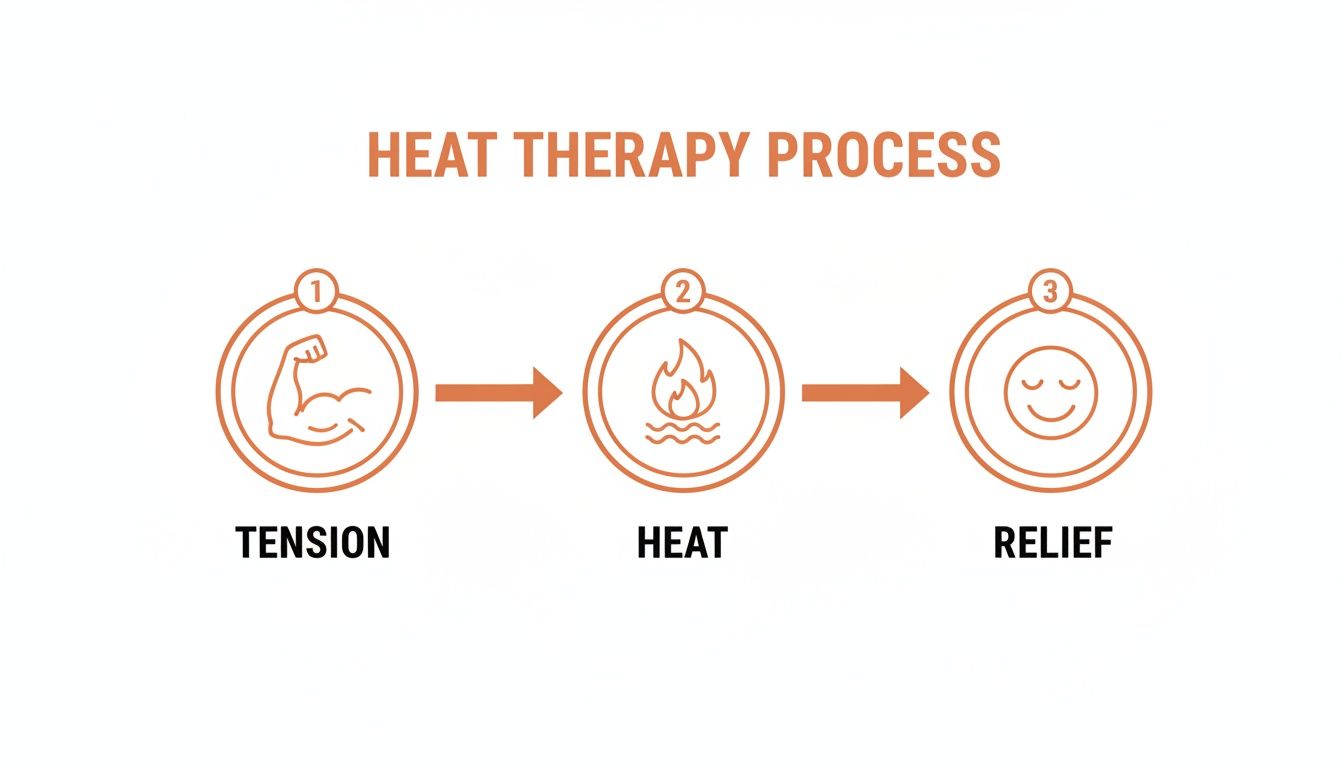
Imagine your tense muscles are like a knotted rope. Heat therapy works by gently warming that rope, making it more pliable and easier to untangle. This warmth boosts circulation, delivering a fresh supply of oxygenated blood to the area. This process helps to relax the muscle fibers, reduce stiffness, and effectively "melt" away the tension that's causing your headache. It’s a simple, powerful way to find relief without reaching for medication.
It's a simple idea, but it’s incredibly effective. The penetrating warmth soothes angry nerve endings, reduces stiffness, and essentially melts away the very source of your headache. For anyone trying to avoid popping pills, understanding this process is the first step toward getting a handle on the pain.
Let's look at a classic example of where heat therapy can be a game-changer.
This picture really drives home how tension in the neck and shoulders creates that band-like pressure around the head. It makes it crystal clear why targeting these muscles is the secret to finding relief.
The Science Behind Soothing Aches
The power of heat is more than just a comforting feeling. When muscles get really tense, they can form tiny, painful contractions often called trigger points. These are those "knots" you feel when you poke around your shoulders. Heat therapy goes right after these by making muscle tissue more elastic and pliable, which helps it release.
"Applying a heating pad to the neck or shoulders helps relax tight muscles... This combination soothes tension and promotes relaxation."
This newfound flexibility doesn’t just ease the pain you're feeling right now; it also makes other remedies, like stretching or self-massage, way more effective. Warming up your muscles first is like warming up clay before you try to shape it—the tissue becomes much more receptive to change and less likely to get injured. For a deeper look at the science, you can learn more about understanding the basics of heat therapy in our full guide.
Heat Therapy in Action: A Real-World Example
Let's picture Sarah, who spends eight hours a day hunched over a computer. Around 4 PM, that all-too-familiar dull ache starts creeping up from the base of her skull and wrapping around her temples. The muscles in her neck and shoulders feel like they've turned to concrete after a long day of bad posture and stress.
Instead of reaching for a pill bottle, Sarah grabs her microwavable neck wrap as soon as she gets home. After a couple of minutes in the microwave, she drapes it over her shoulders, and the deep, penetrating warmth gets to work.
- First 5 Minutes: The first sensation is just pure relief. The gentle heat starts to loosen the surface-level tightness, sending a signal to her nervous system to calm down.
- Next 10 Minutes: As the heat sinks in, blood flow ramps up. Those stubborn knots in her shoulder muscles finally start to soften. The sharp, radiating pain begins to fade, replaced by a much more manageable ache.
- After 15-20 Minutes: By the time she’s done, Sarah can feel a huge difference. Her neck moves more freely, the vise-grip on her head has loosened, and the stress of the day feels like it’s melting away right along with the tension.
This scenario shows how a simple, easy-to-use tool can deliver powerful relief exactly where you need it most. For Sarah, this 20-minute ritual isn't just a quick fix; it's a way to manage daily stress and stop tension headaches before they even get a chance to ruin her evening.
Hands-On Solutions for Immediate Headache Relief
While a good heat pack can work wonders on tense muscles, sometimes you need to get a little more direct to really shut down a headache. This is where massage and stretching come in—they’re your active, hands-on tools for taking back control from the pain.
These techniques go right to the source of so many tension headaches: those small, infuriatingly sore knots in your muscles. You might know them as myofascial trigger points.
Think of a trigger point as a tiny, hyper-sensitive alarm bell stuck in your muscle tissue. A knot in your shoulder doesn't just hurt there—it can broadcast pain all the way up your neck and into your temples. Learning how to find and apply pressure to these spots can interrupt those pain signals and bring almost immediate, drug-free relief.
The Power of Targeted Massage
Don't mistake massage for a simple luxury; it's a legitimate, proven method for managing headaches. The benefit of massage therapy is that it provides a targeted, hands-on approach to releasing the very muscle knots that cause referred pain to your head. By manually working out these trigger points, you are directly addressing the root cause, which is far more effective than just masking the pain.
The results can be surprisingly quick and powerful. In fact, research shows that focused massage can slash both how often and how long headaches stick around. One study in the American Journal of Public Health found that people who got specific massage treatments on their head and neck muscles saw their weekly headache count drop from an average of 6-7 down to just 2-3—after only one week. You can learn more about how massage therapy reduced headache pain in the full study.
Simple Self-Massage Techniques You Can Do Anywhere
The best news? You don't always need a professional to get these benefits. Here are a few simple but incredibly effective techniques you can use right at your desk, on the couch, or whenever you feel a headache creeping in.
- Neck and Shoulder Squeeze: Use the fingers of your right hand to probe the left side of your neck and the top of your shoulder, feeling for those tender, ropy spots. When you find one, press down with firm, steady pressure for 30-60 seconds. Breathe in deep, and then let it go as you exhale. Switch sides and repeat.
- Temple Rub: A classic for a reason. Place your index and middle fingers on your temples and apply gentle pressure in a slow, circular motion for about a minute. This is especially good for that "tight band" feeling around your head.
- Suboccipital Release: This one's a game-changer. The suboccipital muscles are a tiny group right at the base of your skull, and they are major headache culprits. Hook your thumbs just under that bony ridge at the back of your head and apply firm, upward pressure for about 60 seconds to release this super high-tension zone.
Amplify Your Relief with Gentle Stretches
Stretching is your other secret weapon for releasing the tension that builds into headaches. When the muscles in your neck and shoulders are wound up tight, they physically pull on your scalp and head, creating that all-too-familiar vise-grip feeling. A few gentle, slow stretches can lengthen these constricted muscle fibers, easing that pressure.
Here's a pro tip for even better relief: warm up the area with a heat pack for about 10 minutes before you start stretching. Heat makes your muscles more pliable and ready to release, so you can get a safer, deeper, and more effective stretch.
Picture this: you take a five-minute break from your computer. You drape a warm wrap over your shoulders, and then you gently tilt your head to the side, feeling those tight neck muscles slowly give way. That one-two punch of heat followed by stretching is one of the most powerful natural remedies for tension headaches you can have in your arsenal.
Building a Headache-Resistant Lifestyle
While remedies like heat packs and massage are fantastic for soothing a headache that’s already started, the real win is having fewer headaches in the first place. This means shifting your focus from just reacting to pain to proactively building a lifestyle that stops it from ever taking hold.
It’s all about creating a strong defense against future tension headaches by focusing on three simple but crucial pillars: hydration, sleep, and posture.
These aren't massive life changes. Think of them as small, consistent tune-ups, much like maintaining a car. You don’t wait for it to break down; you give it the right fuel and regular care so it runs smoothly. Your body deserves the same attention.
The Critical Role of Proper Hydration
It sounds almost too simple, but dehydration is one of the most common—and overlooked—triggers for tension headaches. When your body is low on fluids, your brain can actually shrink a tiny bit. This slight contraction can cause it to pull away from the skull, putting pressure on nerves and sparking that familiar, dull ache.
Staying properly hydrated is easily one of the most effective natural remedies for tension headaches you can adopt. It helps all your muscles, especially those in your neck and shoulders, work correctly and stay loose instead of cramping up.
- Make it easy: Keep a reusable water bottle on your desk or with you at all times. A simple visual cue works wonders.
- Set a schedule: Try drinking a glass of water when you first wake up, before each meal, and about an hour before bed. This builds a routine that helps you hit your goal without even thinking about it.
- Flavor it up: If you find plain water a bit boring, toss in a slice of lemon, a few cucumber slices, or some berries.
Why Quality Sleep Is Non-Negotiable
A bad night’s sleep does a lot more than just leave you feeling foggy. It practically rolls out the red carpet for a headache. When you’re sleep-deprived, your body pumps out more stress hormones like cortisol, which puts your muscles on high alert—creating the exact kind of tension in your neck and shoulders that leads to headaches.
Poor sleep also messes with your body's ability to manage pain. You become more sensitive to pain signals that you might normally brush off. That's why setting up a consistent, relaxing bedtime routine is such a powerful preventative tool.
Prioritizing sleep isn't a luxury; it's a foundational part of managing pain and stress. A well-rested body is far more resilient to the physical and mental triggers that lead to tension headaches.
To take this a step further, you can explore some effective natural remedies for better sleep that can make a big difference in how often you get headaches.
The video below also has some excellent, easy-to-follow exercises that are perfect for releasing neck tension before you turn in for the night.
Mastering Mindful Posture Day to Day
Your daily posture has a massive, direct impact on how often you get headaches. When you spend hours slouching over a keyboard or craning your neck down to stare at your phone, you're putting non-stop strain on your neck and upper back muscles. This constant tension is a primary headache generator.
Fixing your posture isn’t about sitting ramrod straight all day. It’s about finding a natural, balanced alignment that lets your muscles relax.
Here’s a great mental cue: Imagine a string is gently pulling the crown of your head up toward the ceiling. This simple thought helps lengthen your spine, allows your shoulders to drop away from your ears, and brings your head back in line with your shoulders, instead of jutting forward. Pair that with an ergonomic workspace and frequent breaks to stand up and stretch, and you’ve got a game-changing formula for preventing postural strain.
Using Calming Botanicals and Stress Reduction
So far, we've focused on physical fixes like heat and massage, but it’s impossible to talk about tension headaches without addressing the powerful connection between your mind and your body. The mental and emotional stress you carry all day often shows up as real, physical pain—especially in that all-too-familiar band of pressure around your head.
Think of your nervous system as an alarm that gets stuck in the "on" position. When you're stressed, that alarm is blaring, telling your muscles to stay braced for a threat. This constant state of alert leads to unconscious clenching in your jaw, neck, and shoulders. Learning how to quiet that alarm with simple, mindful practices can break the stress-tension cycle before a headache even gets a chance to start.
The Soothing Power of Aromatherapy
One of the quickest ways to dial down that internal alarm is through your sense of smell. Aromatherapy isn't just about making a room smell nice; it's rooted in physiology. When you inhale specific botanical scents, they send signals directly to your brain, triggering a calming response that soothes your nervous system and helps release pent-up muscle tension.
For headache relief, two essential oils are real standouts:
- Lavender: Famous for its deeply calming and sedative qualities, lavender is perfect for unwinding after a stressful day. It's a go-to for reducing anxiety and promoting the kind of relaxation that prevents stress from turning into a headache.
- Peppermint: With its invigorating, cooling sensation, peppermint is fantastic when a headache is already brewing. It contains menthol, which has a natural analgesic (pain-relieving) effect and helps tight muscles relax on contact.
This isn't just folklore, either. A 2019 double-blind trial found that applying 1.5% peppermint oil drops helped reduce headache intensity for 40% of participants. In fact, studies show that between 28-82% of headache sufferers are turning to integrative approaches like this, with essential oils being a top choice.
The image below beautifully captures how you can weave these botanicals into a complete, soothing ritual.

This setup is the perfect example of multi-sensory relief—combining the therapeutic scent of lavender with the deep, muscle-relaxing power of a heat wrap for a true mind-body reset.
Simple Deep Breathing to Break the Tension Cycle
You don’t need anything complicated to start managing stress right now. One of the most powerful tools you have is your own breath, and it's always with you. The next time you feel tension creeping up your neck, take five minutes for this simple deep-breathing exercise:
- Find a quiet spot where you can sit or lie down comfortably.
- Inhale slowly through your nose for a count of four, letting your belly expand.
- Hold that breath gently for a count of seven.
- Exhale slowly and completely through your mouth for a count of eight.
- Repeat the cycle 3 to 5 times, focusing only on the rhythm of your breathing.
This 4-7-8 breathing technique is a shortcut to activating your parasympathetic nervous system—your body’s "rest and digest" mode. It almost instantly lowers stress hormones and tells your muscles it's safe to let go.
By consciously slowing your breath, you send a direct message to your brain that the danger has passed. This simple act can stop the unconscious muscle clenching that so often escalates into a full-blown tension headache.
Creating a small, daily routine can make a world of difference in preventing headaches before they even begin.
Simple Stress-Reduction Routine for Headache Prevention
Here’s a quick look at how you could incorporate these practices throughout your day to keep stress levels in check.
| Time of Day | Activity (5-10 Minutes) | Benefit |
|---|---|---|
| Morning | A few drops of peppermint oil on a tissue for mindful inhales. | Boosts alertness and starts the day with a clear head. |
| Midday | 4-7-8 breathing exercise at your desk. | Interrupts the buildup of work-related stress and muscle tension. |
| Evening | Warm lavender-scented heat wrap on your neck and shoulders. | Eases the day's physical tension and prepares your mind for restful sleep. |
A consistent routine like this trains your body and mind to manage stress more effectively over time.
Imagine ending your day not with a throbbing head, but with a lavender-scented heat wrap draped over your shoulders while you practice this calming breathing. Our article on the soothing powers of lavender for pain relief explores this amazing botanical in more detail. For those who need extra support, exploring the best supplements for stress relief can be another great way to manage the underlying tension that often triggers headaches.
Knowing When to See a Doctor
Relying on natural remedies for tension headaches is a fantastic first step, and it often does the trick. But being your own best health advocate means knowing when a headache is more than just a headache. Most of the time, that dull, aching pressure is exactly what it feels like—your body reacting to stress. On rare occasions, though, a headache can be a warning sign for something more serious.
Learning to spot these "red flags" isn't about creating anxiety. It’s about giving you the confidence to know when to stick with your home-care routine and when it's time to call in a professional.
Spotting the Red Flags
If your headache shows up with any of the following symptoms, it's time to seek medical advice right away. Think of these as clear signals that something beyond typical muscle tension is going on.
This chart from Cognitive FX is a great visual tool. It can help you figure out how to describe the location and type of pain to your doctor, which is incredibly helpful for a quick diagnosis.
Being able to say, "The pain is a tight band around my forehead" versus "It's a sharp pain behind one eye" gives your doctor valuable clues to work with.
Here are the key warning signs you should never ignore:
- A "Thunderclap" Headache: This isn't a slow build. It’s a sudden, excruciating headache that hits its peak intensity in under a minute. Many people describe it as “the worst headache of my life.”
- Fever and a Stiff Neck: If a headache comes along with a high temperature and you can’t touch your chin to your chest, it warrants an immediate medical evaluation.
- After a Head Injury: Any headache that starts after a fall, car accident, or any kind of blow to the head needs to be checked out by a professional.
- Neurological Changes: Don't wait. If your headache is accompanied by weakness, numbness, blurred or double vision, confusion, or slurred speech, it’s a clear sign to get help.
When Your Usual Headaches Change
Beyond those immediate red flags, it's also wise to see a doctor if the pattern of your headaches changes.
Are they happening more often? Getting more intense? If your go-to natural remedies suddenly stop working or your pain feels different than usual, a check-up is a smart move. It helps rule out other causes and makes sure you're on the right track for long-term relief.
Your Questions About Natural Headache Relief, Answered
When you're dealing with tension headaches, it's natural to have questions about, well, natural remedies. Getting straightforward answers can make all the difference in feeling confident about managing your pain without reaching for a pill bottle first.
Let's dive into some of the most common questions people have when trying to tackle headaches the natural way.
How Often Can I Use a Heat Pack for My Headache?
When you’re in the middle of a headache, you can safely use a microwavable heat pack for about 15-20 minutes at a time. Feel free to repeat this a few times throughout the day as needed.
For prevention, many people find a simple routine works wonders: a 15-minute session in the morning helps loosen up tight neck muscles for the day ahead, and another session at night is perfect for unwinding. Just be sure to let your skin return to its normal temperature between sessions.
Is Cold Therapy Ever Good for a Tension Headache?
It can be, but it depends. While heat is usually the best bet for relaxing the tense muscles that cause these headaches, some people find a cold pack on their forehead or temples feels incredibly soothing.
However, if you can trace your pain back to that classic "coat hanger" tension in your neck and shoulders, applying heat directly to that area is almost always going to be more effective. It targets the problem at its source.
The most effective strategy is often applying warmth right where the tension starts—your neck and shoulders. Relaxing those muscles is what ultimately relieves the headache pain.
How Quickly Do These Natural Remedies Work?
That really depends on the remedy you're using. Some methods offer relief surprisingly fast, while others are more of a long game.
Direct treatments like heat therapy and massage can start easing your pain within just 15 to 30 minutes. They’re fantastic for getting some immediate comfort when a headache strikes.
On the other hand, long-term strategies like improving your posture or staying properly hydrated work more gradually. You won't feel a change overnight, but over several weeks, you’ll likely notice you're getting fewer headaches, and the ones you do get are far less intense.
Think of it this way: someone who starts using a heated neck wrap and doing daily stretches might feel better right away. If they also commit to drinking more water and fixing their desk setup, they’ll probably see a huge drop in how often headaches pop up over the next month. The magic happens when you combine quick-relief methods with consistent, preventative habits.
If you're looking for a simple, effective way to start your journey toward drug-free relief, check out the microwavable heat packs and neck wraps from SunnyBay. You can find the perfect tool to melt your tension away at https://sunny-bay.com.


