


Your Guide to Using a Heating Pad for Lower back Pain
-
If you're one of the millions struggling with a nagging, aching lower back, you're in the right place. Heat therapy has long been a trusted, non-invasive way to soothe muscle tension and stiffness, and a good heating pad for lower back pain is one of the most effective tools you can have in your corner. Let's break down how to make it work for you.
Finding Fast Relief for Your Aching Lower Back
Lower back pain is an almost universal problem. It can derail everything from your focus at work to your ability to enjoy a simple walk. It's no exaggeration to say it's the leading cause of disability across the globe.
In 2020 alone, an estimated 619 million people were dealing with low back pain. That number is expected to climb to 843 million by 2050, which just underscores how badly we need effective, accessible ways to find relief. Thankfully, managing this kind of discomfort doesn't always have to start with a pill bottle.
Why Heat Therapy Is a Go-To Solution
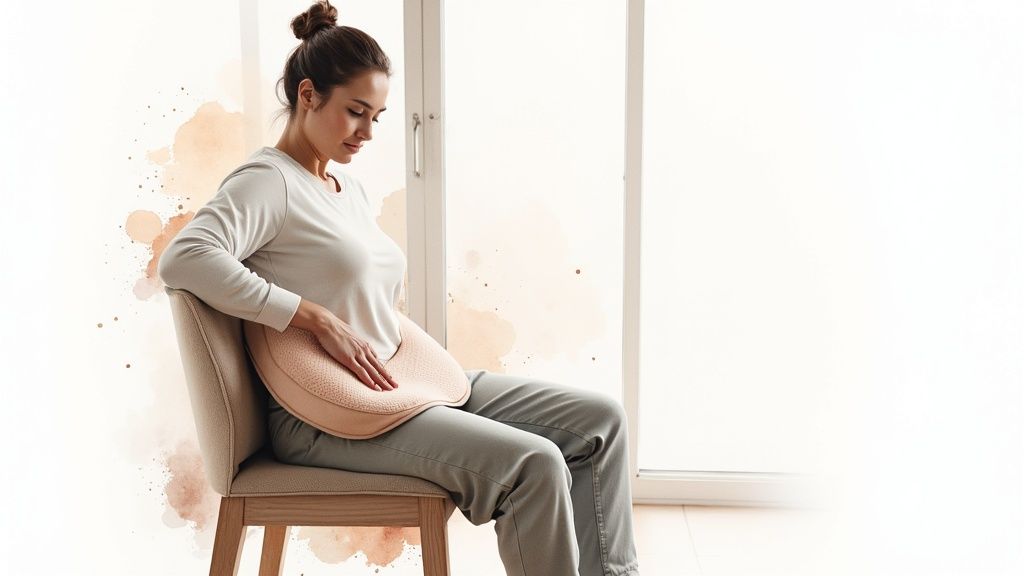
So, how does a simple heating pad do so much? Imagine your sore back muscles are like a knotted rope. The tension is so tight that it restricts movement and sends sharp pain signals. Applying the gentle warmth of a heating pad is like slowly and carefully unknotting that rope. The heat penetrates deep into the muscle fibers, signaling them to relax and let go.
This process is powered by vasodilation, which is just a technical way of saying the heat helps your blood vessels widen. This increased blood flow rushes oxygen and nutrients to your sore, tired muscles. At the same time, it helps flush out the metabolic byproducts that contribute to pain and speeds up the healing process.
Think of it like this: a tight, painful muscle is like a cold, stiff rubber band. If you try to stretch it, it might snap. But if you warm it up first, it becomes pliable and flexible. That's exactly what heat does for your back, offering both immediate comfort and long-term therapeutic benefits.
- Soothes Muscle Spasms: Warmth helps to relax the overactive nerve signals that trigger those painful, involuntary muscle contractions.
- Reduces Stiffness: By loosening up tight muscles, heat makes it easier and less painful to move around.
- Provides Natural Comfort: It's a simple, drug-free way to manage those persistent aches that can wear you down day after day.
The Power of a Combined Approach
A heating pad is fantastic on its own, but it becomes even more powerful when you pair it with other therapies. Think of it as a great opening act.
For instance, applying heat for 15-20 minutes before you do some gentle stretching can make your muscles much more receptive. Here’s an example: If you struggle with a tight lower back in the morning, use a heating pad while you're still in bed. After 15 minutes, the muscles will be warm and loose, making it much easier and safer to perform gentle knee-to-chest stretches. This combination leads to a more productive session with less pain.
Combining heat with massage therapy can also be a game-changer. The heat preps the muscle, allowing a massage to break up stubborn knots more effectively. For more ideas, you can explore other forms of natural pain relief for back pain.
Taking a well-rounded approach is always best. Supporting your body's structural health from the inside out is just as important as treating the symptoms. That might mean looking into things like the best supplements for bones and joints. This guide is designed to help you build a complete pain management toolkit, and it all starts with the simple, effective heating pad.
How Heat Actually Heals and Soothes Your Muscles
Ever wonder what’s really going on when that warm heating pad starts to melt away your back pain? It’s more than just a cozy feeling. There’s some powerful science at work, triggering your body's own healing processes. Using a heating pad for lower back pain is one of the best ways to signal those tense, knotted muscles that it’s finally time to let go.
Think of your sore, tight back muscles like a stiff, cold rubber band. They’re brittle, inflexible, and one wrong move could lead to a painful spasm. Now, imagine gently warming that rubber band. It becomes soft, pliable, and relaxed. That simple idea is exactly what’s happening in your back.
The Science of Vasodilation
When you apply that comforting warmth, you kick off a process called vasodilation. It’s just a technical term for your blood vessels widening. The heat encourages the arteries and capillaries in your lower back to open up, which immediately ramps up blood flow to that exact spot.
This surge of fresh, oxygen-rich blood is the key to healing. It’s like a delivery service bringing vital nutrients straight to the damaged muscle tissue, helping it repair on a cellular level. At the same time, this improved circulation acts like a cleanup crew, efficiently flushing out the metabolic junk—like lactic acid—that builds up in stressed muscles and makes them feel so sore and stiff.
It’s not just a folk remedy. A study in the Journal of Bodywork and Movement Therapies found that a staggering 85% of experts recommend heat therapy for lower back pain, cementing its role as a trusted treatment.
From Pain Signals to Deep Relaxation
Heat therapy does more than just boost circulation; it also works directly on your nervous system. The warmth stimulates sensory receptors in your skin, which helps block pain signals from ever reaching your brain. It’s almost like turning down the volume on your body's pain alarms, which brings that sweet, immediate relief.
This is crucial for breaking the dreaded pain-spasm cycle. When you injure a muscle, it often seizes up in a protective spasm. That spasm causes more pain, which in turn causes the muscle to tighten even more. Heat steps in and breaks this vicious cycle by:
- Calming the Nerves: The soothing warmth helps settle down the overactive nerve signals that cause those involuntary muscle contractions.
- Increasing Flexibility: As muscles relax and loosen up, your range of motion improves, making it easier and less painful to bend and stretch.
- Promoting Comfort: The simple sensation of heat provides a deep sense of comfort, which is incredibly helpful when stress is making your back tension worse.
Maximizing the Benefits of Heat
To get the most out of your heating pad, consistency is everything. Applying heat for 15-20 minutes at a time is the sweet spot—it allows the warmth to penetrate deep into the muscle without irritating your skin. You can dive deeper into the specific benefits of heat therapy in our detailed guide.
Remember, heat therapy works best as part of a complete wellness plan. To complement its soothing effects, it’s a great idea to explore other ways to speed up muscle recovery and support your overall health. Once you understand the science, you can see that a heating pad is far more than a simple comfort—it’s a proven tool for finding real, lasting relief.
Choosing The Right Heating Pad For Your Back Pain
When it comes to finding the right heating pad, there’s no single "best" option—only the best option for you. Your lifestyle, the type of pain you're feeling, and even your personal preferences will all point you toward the ideal choice. Think of this as your personal buyer's guide to adding the perfect heating pad for lower back pain to your pain management toolkit.
Let's break down the three main players on the market: electric, microwavable, and infrared pads. Each has its own distinct personality and purpose, and knowing their pros and cons is the first step to making a smart investment in your comfort.
Before we dive in, this simple diagram shows what's happening on a biological level. Heat isn't just about feeling good; it's about kickstarting your body's own healing powers.
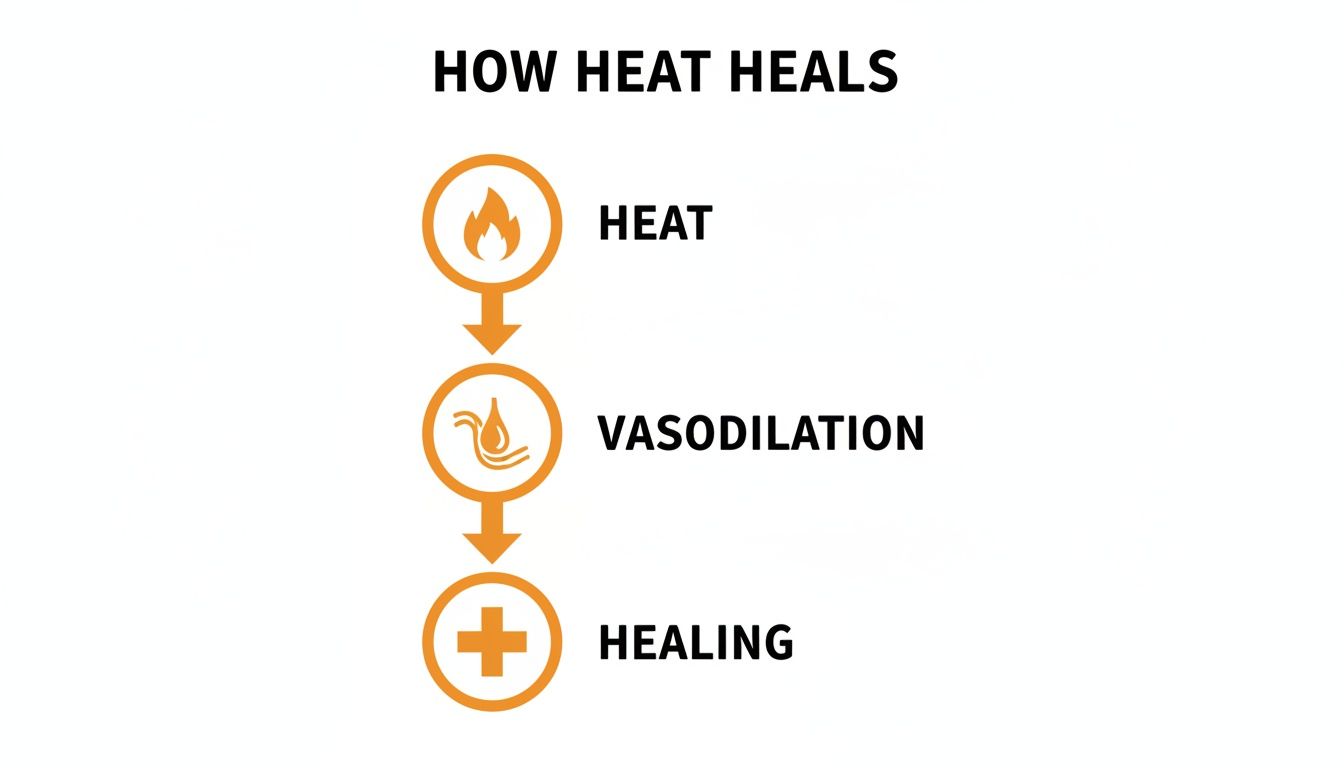
The big idea here is that applying warmth sets off a chain reaction, starting with improved circulation that brings healing nutrients to your aching muscles.
Electric Heating Pads: The Consistent Workhorse
Electric heating pads are what most of us grew up with. You plug them in, and they deliver a steady, reliable stream of heat for as long as you need.
If you're stuck at a desk all day and crave constant warmth, an electric pad with multiple heat settings and an auto-shutoff timer is a fantastic choice. The obvious downside? The cord. It keeps you tethered to an outlet, which isn't great when you need to be on the move.
Infrared Heating Pads: The Deep Penetrator
Infrared is a more modern technology that offers a different kind of heat. Instead of just warming your skin, its rays penetrate much deeper to warm your muscles and joints directly.
Because it's a more advanced therapy, infrared pads usually come with a higher price tag. They've become especially popular in physiotherapy settings for treating chronic conditions like arthritis, making them a go-to for serious athletes and anyone recovering from surgery where deep, inflammation-calming heat is needed.
Microwavable Heating Pads: The Versatile Solution
This is where you get a fantastic blend of convenience, natural comfort, and potent relief. Microwavable heating pads are typically filled with natural materials like flaxseed or wheat, which you pop in the microwave for a minute or two to get a deeply soothing, moist heat.
Many physical therapists and clinicians stand by moist heat. They’ve seen firsthand how it seems to work its way deeper into tight, sore muscles than the dry heat produced by most electric pads, often leading to faster and more significant relief.
Top-tier microwavable pads, like those from trusted U.S. brands like SunnyBay, are brilliant because they’re designed to mold perfectly to your body. For your lower back, this means no awkward gaps—just targeted heat right where you need it. Best of all, they're cordless, so you can take that relief with you anywhere, from the car to the couch.
To make things even clearer, let's put these three options side-by-side.
Comparison of Heating Pad Types for Back Pain
This table breaks down the key differences between the three main types of heating pads, helping you pinpoint which one aligns best with your needs for pain relief.
| Feature | Electric Heating Pad | Microwavable Heating Pad | Infrared Heating Pad |
|---|---|---|---|
| Heat Type | Dry, consistent | Moist, gradually cools | Deep, penetrating |
| Portability | Limited by cord | Excellent, fully portable | Limited by cord |
| Heat Control | Multiple settings | None (depends on microwave) | Multiple settings |
| Conformity | Good | Excellent (conforms to body) | Varies by design |
| Upfront Cost | Low to Moderate | Low | High |
So, which one should you choose? If you need hours of consistent heat and don't mind staying put, an electric pad is a solid, budget-friendly pick. If you're after the most intensive, deep-reaching therapy and have the budget for it, infrared is an excellent investment.
But for most people looking for a balance of effective relief, go-anywhere convenience, and natural moist heat that hugs every curve, a high-quality microwavable pad is tough to beat. Of course, getting the right fit is just as important as the type, which you can learn more about in our guide on choosing the right size and shape of heating pad.
Getting the Most Out of Your Heat Therapy Routine
Owning a heating pad for lower back pain is a great first step, but how you use it makes all the difference. To really unlock its full potential, you need to get the timing, temperature, and technique just right. When you do, a simple pad becomes a powerful tool for melting away muscle tension and kick-starting the healing process.
Think of it like brewing the perfect cup of tea. If the water isn't hot enough, you won't get much flavor. But if it's scorching hot or you leave the bag in too long, it turns bitter. Heat therapy is the same—finding that sweet spot is the key to deep, soothing relief without any risks.
The Golden Rules of Application
To get the best results, stick to a few simple guidelines. These steps ensure you’re warming the muscles properly while keeping your skin completely safe.
-
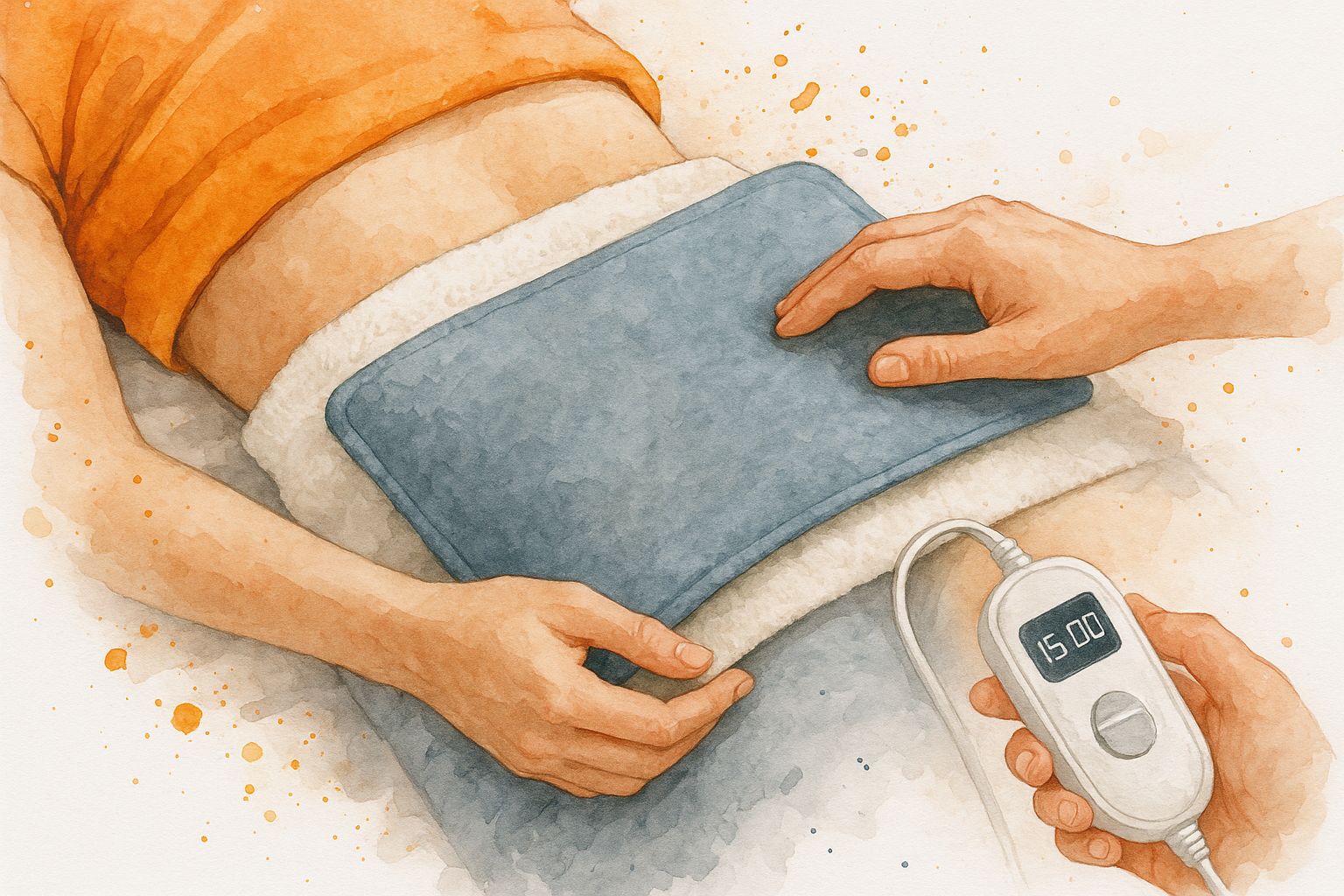
Protect Your Skin: Never, ever place a heating pad directly on bare skin. Always use a thin towel or a layer of clothing as a buffer. This one simple step prevents burns and helps distribute the warmth more evenly.
-
Find the Right Temperature: Start on the lowest setting. You can gradually increase the heat until it feels comfortably warm, not uncomfortably hot. The goal is a deep, soothing sensation that penetrates the muscle tissue, not a surface-level scorch.
-
Stick to the Ideal Timeframe: For most situations, the sweet spot for a heat therapy session is between 15 and 20 minutes. That's long enough to boost blood flow and relax tight muscles, but short enough to avoid skin irritation or any risk of tissue damage.
Putting It Into Practice: When to Use Your Heating Pad
Knowing how to apply heat is one thing; knowing when to apply it can make all the difference in your day. Weaving a heating pad into your daily routine is where the real magic happens.
-
The Pre-Activity Warm-Up: Planning on some gentle stretching or light exercise? Use your heating pad for 15 minutes beforehand. This warms up the muscles, making them more pliable and reducing your risk of a strain. Think of it as a targeted warm-up for your most troublesome spot.
-
The Post-Work Decompression: After a long day slouched over a computer, your lower back is probably screaming. A 20-minute session can melt away all that built-up tension, helping you ease into a more comfortable evening. It’s a great way to counteract the effects of sitting all day.
-
The Morning Stiffness Solution: If you wake up feeling stiff and achy, start your day with heat therapy. A little warmth can loosen up your lower back before you even get out of bed, making those first few movements much smoother and less painful.
“The consistent application of moderate heat for 15-20 minutes is a cornerstone of non-pharmacological pain management. It’s a simple, effective way to break the pain-spasm cycle that keeps so many people from their daily activities.”
Safety Tips You Absolutely Cannot Ignore
While heat therapy is incredibly safe, a few non-negotiable rules will keep your experience positive. Ignoring these can lead to burns or other skin problems.
First and foremost, never fall asleep with a heating pad on. Even a low setting can cause serious burns if you’re not awake, especially if you shift and put pressure on the area.
This is exactly why an auto-shutoff feature is a must-have for any electric pad—it’s a built-in safety net. Microwavable pads offer a similar, natural safeguard, as their heat gradually dissipates over time. By following these simple but crucial tips, you can make your journey to pain relief both effective and completely worry-free.
Finding the Right Heat Therapy for Your Lifestyle
Your back pain is unique to you, so your approach to relief should be too. The secret to getting the most out of a heating pad for lower back pain is to find one that fits seamlessly into your daily life. It’s not about changing your routine for the heating pad; it’s about making the pad work for you.
The real magic of heat therapy is how adaptable it is. A simple pad can be a game-changer for so many different people, from desk jockeys to dedicated athletes.
Heat Therapy for the Office Worker
Sitting at a desk for eight hours a day is a recipe for a stiff, aching lower back. For anyone stuck in a chair, a portable, cordless microwavable heating pad can be a total lifesaver.
Here's how this helps: Imagine you're on a deadline, and your back starts to seize up. Instead of suffering through it, you can take a two-minute break, pop the pad in the office microwave, and tuck it behind your back. You get 15-20 minutes of targeted heat that melts away tension without drawing any attention. This simple act turns a potential source of chronic pain into a manageable part of your day.
Relief for the Active Athlete
If you’re an athlete or just love a good weekend workout, your main goal is recovery. After a heavy lifting session or a long run, your lower back and glutes are probably screaming. This is where a large heating pad that can cover the entire area becomes your best friend.
Applying that broad heat boosts circulation across the whole muscle group. This helps flush out lactic acid, soothe those overworked fibers, and get your body ready for its next challenge. It’s a simple way to fend off delayed onset muscle soreness (DOMS).
Comfort for Seniors Managing Arthritis
For older adults dealing with the persistent ache of arthritis, simplicity and ease of use are everything. A lightweight microwavable pad offers gentle, soothing warmth without the fuss of cords, plugs, or confusing settings.
This kind of targeted relief can make a huge difference in easing joint stiffness and improving mobility, especially first thing in the morning. This very convenience is a major reason the U.S. heating pad market hit USD 544.76 million in 2023, with cordless, senior-friendly designs leading the way for the 65+ crowd. As technology evolves, we’re even seeing smart features like app controls for postoperative back recovery. You can dig into more of these trends in the full research report.
The best tool is the one you'll actually use. Whether it's a simple microwavable pad or an advanced smart device, finding what fits seamlessly into your life is the key to consistent relief.
The Power of Combining Heat and Massage
No matter who you are, you can take the benefits of heat to the next level by adding gentle massage into the mix. Heat therapy is the perfect opening act—it warms up and relaxes your muscles, making them far more receptive to massage.
Think of a muscle knot like a cold, stiff piece of clay. Applying heat makes it soft and pliable, so that gentle massage can then knead it away. This one-two punch delivers a much deeper level of relief, breaking up stubborn tension for comfort that truly lasts.
Here are a few ways to do it:
- Use a heating pad for 15 minutes before a scheduled massage.
- After applying the pad, use a handheld massager on the warmed-up muscles.
- Look for a heating pad that has massage features built right in.
By personalizing your approach, you turn a simple heating pad from a basic comfort item into a powerful tool designed specifically for your pain, your body, and your life.
So, Why Do Pros Love Microwavable Pads?
We've covered the science behind heat therapy and looked at the different heating pads out there. After all that, one option consistently stands out for both physical therapists and people managing pain at home: a high-quality, U.S.-made microwavable pad. This isn't just a matter of opinion; it's a choice grounded in real-world effectiveness, convenience, and a more natural kind of comfort.
Chiropractors and physical therapists often point their patients toward these pads for one big reason—they provide a unique type of relief. The moist heat that comes from natural fillings like flaxseed seems to get deeper into those tight, aching muscles than the dry heat from most electric pads. This deeper penetration can translate into more significant muscle relaxation and quicker relief from that nagging stiffness.
Real-World Relief for Everyday Life
Let's be honest, one of the best things about a microwavable pad is that it's completely portable. No cords, no plugs. You can bring your pain relief from your desk chair to your car commute without a second thought. Someone dealing with chronic morning stiffness, for instance, can pop their pad in the microwave while the coffee brews and wear it as they get ready for the day. It's a simple way to ease into your morning with less pain and more freedom of movement.
That kind of freedom means you can weave heat therapy right into your daily routine, instead of being stuck next to a wall outlet.
Plus, these pads are typically filled with natural materials that mold perfectly to the curve of your lower back. Think about trying to wrap a stiff, flat electric pad around your waist—it just doesn't work. A soft, flexible pad, on the other hand, drapes over every contour, ensuring the heat gets delivered exactly where you need it most, with no awkward gaps.
When you choose a brand trusted by clinics for over 20 years, like SunnyBay, you’re not just buying a heating pad—you’re investing in a product that has been vetted for its safety, durability, and therapeutic results.
Taking Control of Your Comfort
The goal of this guide is to give you the confidence to make a smart choice for your body. Choosing a clinic-trusted, U.S.-made microwavable heating pad is a practical move toward managing your lower back pain. It brings together the deep-reaching power of moist heat with the untethered convenience that modern life demands.
When you understand these benefits, you can pick the right tool to start feeling better. And this decision is about more than just temporary relief—it's about reclaiming your day-to-day comfort and quality of life, one soothing session at a time.
Still Have Questions? Let's Talk Heating Pads
Even with all this info, you might still be wondering about a few specifics. That’s perfectly normal. Let's tackle some of the most common questions people have when they start using a heating pad for lower back pain, so you can feel completely comfortable and get the best results.
Getting these practical details right makes all the difference in your heat therapy experience.
Heat or Cold: What's the Right Call for Back Pain?
This is the classic debate, and the answer really depends on why your back hurts. I always tell people to think of it this way: ice is for fresh injuries, and heat is for tired, sore muscles.
If you’ve just tweaked your back lifting a heavy box and it’s starting to swell, reach for a cold pack. For the first 48 hours, cold therapy is your best bet because it helps constrict blood vessels and calm down that initial inflammation.
But for the nagging, chronic soreness, stiffness, and persistent aches that plague so many of us? Heat is the clear winner. It boosts circulation, encourages tight muscles to relax, and helps the healing process along. For most ongoing lower back pain, a heating pad is absolutely the way to go.
What's the Ideal Time for a Heat Session?
You'll find the sweet spot is right around 15 to 20 minutes. That’s just long enough for the warmth to work its way deep into your muscle tissue, easing spasms and getting the blood flowing, but not so long that it risks irritating your skin.
It’s perfectly safe to use your heating pad a few times throughout the day as you need it. Just make sure to give your skin a break of at least an hour in between sessions. This allows your skin to cool down and return to its normal temperature, keeping it healthy and happy.
A common mistake is falling into the "more is better" trap. Leaving a heating pad on for an hour doesn't give you extra relief—it just increases the risk of skin irritation or a mild burn. Sticking to the 20-minute rule is the safest and most effective approach.
Can I Sleep with My Heating Pad On?
Please don't. You should never fall asleep with a heating pad running. Even on the lowest setting, the constant, unattended heat can cause serious burns, especially if you roll over and trap the heat against your skin.
If you find that a little warmth helps you unwind before bed, that’s great! Just use your heating pad for about 20 minutes before you intend to fall asleep, and then be sure to turn it off and set it aside.
If you're using an electric pad, look for one with a trustworthy auto-shutoff timer. This is where microwavable pads really shine, though—they have a built-in safety feature, as they naturally and gradually cool down over time.
Ready to feel the kind of deep, comforting relief trusted by physical therapists? SunnyBay creates a full line of U.S.-made, microwavable heating pads designed to hug your body and dissolve tension. Find the perfect solution for your lower back pain and start your journey to feeling better at https://sunny-bay.com.


