


Finding the Best Microwave Heating Pads for Soothing Pain Relief
-
Picture this: you've got a stubborn ache, a knot in your shoulder that just won't quit. Instead of reaching for a pill bottle, you find relief by simply melting that tension away with soothing warmth. That's the magic of a good microwave heating pad. For everything from a stiff neck to that nagging lower back pain, they deliver targeted, moist heat, making them one of the simplest and most effective ways to find drug-free relief.
Your Guide to Effortless, Drug-Free Pain Relief
Let's face it, pain is a part of life. It might be the dull throb in your shoulders after a long day hunched over a keyboard, or maybe it's that sharp twinge in your lower back from an old injury. While popping a pill can feel like a quick fix, more and more of us are looking for natural, sustainable ways to manage discomfort. This is where the simple brilliance of heat therapy really shines, offering a powerful alternative that works with your body's own healing mechanisms.
Think of this guide as your complete roadmap to feeling better, naturally. We're going to explore how these incredible wellness tools use the power of warmth to help your body do what it does best: heal itself. A microwave heating pad isn't some complicated gadget; it’s a straightforward, effective tool that has become a staple in homes and physical therapy clinics for good reason. To dive deeper into their benefits, check out our article on microwavable hot packs.
The Growing Demand for Natural Relief
The move away from relying solely on medication isn't just a fleeting trend—it's a real shift in how we approach personal wellness. People are becoming much more aware of methods that work with the body, not just on it. Imagine using a warm pad on your lower back after a long day; the heat doesn't just mask the pain, it actively increases blood flow to the area, delivering oxygen that helps your muscles repair themselves.
This preference for natural solutions is clearly showing up in the numbers. The global market for microwave heating pads was already valued at a hefty USD 331.91 million back in 2025. It’s now projected to climb to an impressive USD 562.84 million by 2032. That kind of growth speaks volumes about the global demand for convenient, drug-free ways to manage pain.
So, How Does Heat Therapy Actually Work?
At its core, heat therapy (also known as thermotherapy) is the simple act of applying warmth to the body to get a therapeutic benefit. The process is straightforward but incredibly powerful. It’s like giving your body’s natural healing systems a turbo-boost.
Here’s what happens when you apply heat:
- It Boosts Blood Flow: The warmth causes blood vessels in the area to dilate, or widen.
- It Delivers the Good Stuff: This increased circulation brings a fresh supply of oxygen and nutrients to damaged tissues, which helps speed up the healing process.
- It Relaxes Tight Muscles: That gentle warmth is amazing for soothing tense muscles, easing stiffness, and calming painful spasms.
- It Interrupts Pain Signals: Heat can actually stimulate sensory receptors in your skin, which can help block pain signals from reaching your brain.
Here's a simple way to think about it: applying a warm pad is like opening up a clogged highway. It allows the crucial repair crews (your body's oxygen and nutrients) to get to the scene of the accident (that sore muscle) much more quickly and efficiently.
Of course, heat therapy is just one piece of the puzzle. For chronic issues, you might also look into other drug-free approaches, like finding the best mattress for back pain to give your spine proper support all night long.
By the time you finish this guide, you’ll have all the knowledge you need to pick the perfect pad for your specific needs.
How Gentle Heat Unlocks Your Body's Healing Power
Have you ever wondered why a warm compress feels so good on a sore muscle? It's not just in your head. That comforting sensation is actually your body kicking its natural healing process into high gear, and a good microwave heating pad is the perfect tool to give it that nudge. This is a simple, drug-free approach with powerful science behind it.
When you lay a warm pad over a stiff or aching area, the heat works its way deep into your muscle tissue. This warmth triggers something called vasodilation, which is just a fancy way of saying your blood vessels widen. Think of it like opening up all the lanes on a jammed freeway—traffic suddenly starts flowing smoothly again.
This improved circulation is the real hero here. It rushes a fresh supply of oxygen and nutrients right to where you're hurting. At the same time, this boost in blood flow helps flush out the metabolic junk, like lactic acid, that builds up and causes that familiar muscle soreness and stiffness.
The Science of Soothing Pain
But better circulation is just the beginning. Heat therapy wages a multi-front war on discomfort, offering a level of relief that makes it a cornerstone of physical therapy and at-home care. The benefits are similar to a light massage, encouraging muscles to let go of tension.
One of the first things you'll notice is pure muscle relaxation. The gentle warmth encourages tense muscle fibers to let go, easing painful spasms and loosening the tightness that comes from stress or an injury. For instance, if you've got a classic case of "desk neck" after a long day, applying heat helps those constricted muscles lengthen and relax, giving you back your range of motion.
On top of that, heat therapy can act like a natural painkiller. The warmth stimulates sensory receptors in your skin, which can actually block pain signals from reaching your brain. It's a bit like turning on some pleasant music to drown out an annoying noise—the feeling of warmth simply overrides the sensation of pain.
From Cramps to Recovery: A Powerful Therapy at Home
It’s this simple effectiveness that has made heat therapy a go-to solution for so many common aches and pains. It’s a powerful and incredibly accessible tool for managing everything from chronic conditions to acute soreness.
Here’s how it works in a few common scenarios:
- For Menstrual Cramps: Heat helps relax the uterine muscles as they contract, offering fast, targeted relief right where you need it.
- For Post-Workout Soreness: By boosting blood flow, a heating pad helps clear out the byproducts of a tough workout and delivers the nutrients your muscles need to repair themselves.
- For Arthritis Pain: For many, the warmth is fantastic for easing joint stiffness, improving flexibility, and dulling the persistent ache of arthritis.
It's no accident that these pads are found in so many homes. In fact, home use is the driving force in this market, accounting for roughly 70% of global sales. As of 2025, that translates to over 70 million units sold each year, cementing the heating pad's role in everyday wellness. This popularity is tied directly to a growing awareness of its proven benefits; studies have shown heat therapy can reduce arthritis pain by up to 50% and ease menstrual cramps for 80% of users in as little as 15 minutes. You can dig into more of these microwavable heating pad market trends on archivemarketresearch.com.
Once you understand how gentle heat works with your body, you realize a microwave heating pad is more than just a source of warmth. It's a tool that actively supports and speeds up your body's amazing ability to heal itself.
How to Choose Your Perfect Heating pad
With so many microwave heating pads out there, it’s easy to get lost in the options. But picking the right one doesn't have to be a guessing game. It really just comes down to three key things: what’s inside, what it’s made of on the outside, and how it’s designed to fit your body.
Once you know what to look for, you can find a high-quality pad that will feel like it was made just for you. Let's dig into the details of fillers, fabrics, and shapes so you can choose with confidence.
The Heart of the Pad: What’s Inside Matters Most
The filling is what does all the heavy lifting in a microwave heating pad. It’s the engine that absorbs, holds, and radiates that soothing warmth deep into your muscles. And believe it or not, different natural fillers create wildly different experiences.
You’ve probably seen DIY pads filled with things like rice, corn, or wheat. While those are fine for a quick project, they don’t always hold up well over time. They can lose their ability to retain heat and sometimes start to smell a little like burnt popcorn after a few too many trips to the microwave.
That's why premium fillers like flaxseed have become the gold standard. Flaxseeds are tiny and contain about 40% oil, a natural combination that lets them hold onto moist heat for a surprisingly long time. This means you get a consistent, penetrating warmth that doesn’t just fade away after five minutes. Plus, the smooth, silky feel of the seeds allows the pad to mold perfectly to your body, whether it’s draped over your shoulder or wrapped around your lower back.
This quick guide can help you figure out what kind of heat therapy is best for your specific ache or pain.
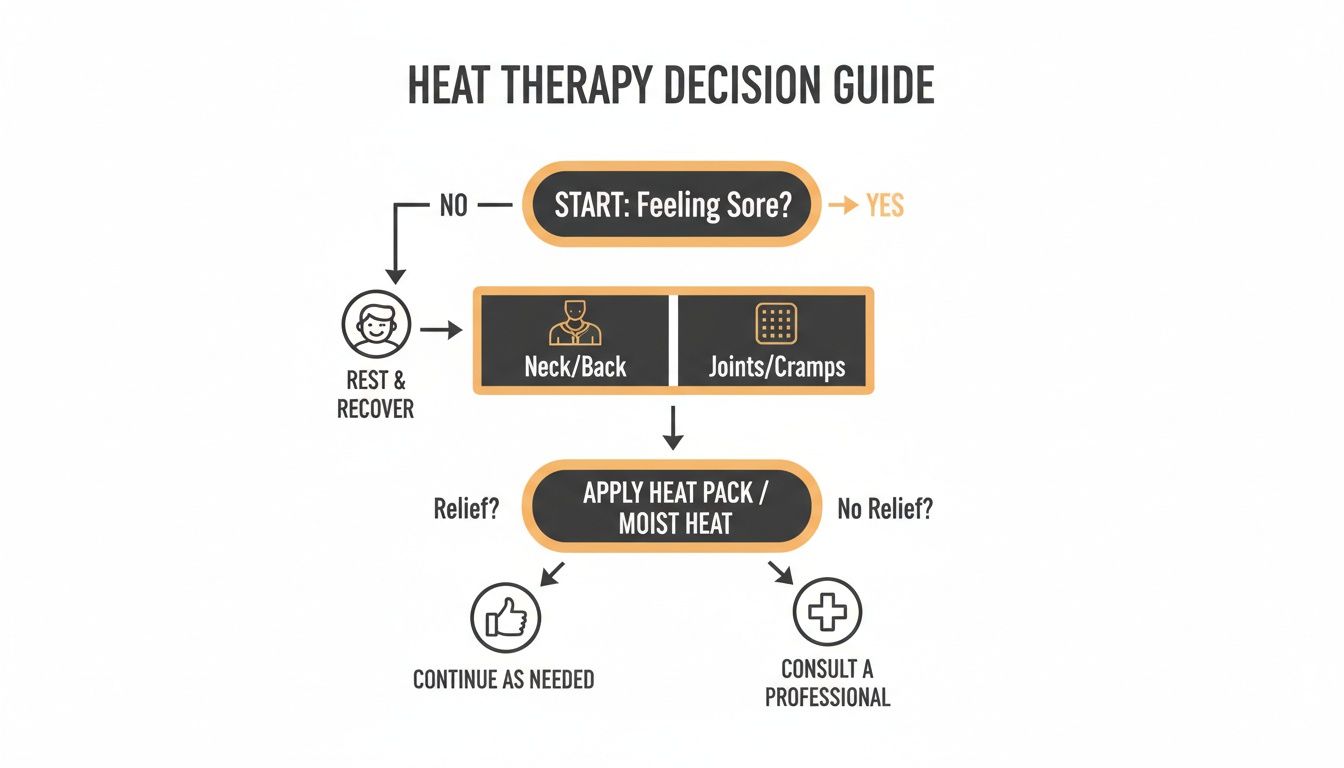
As you can see, matching the right shape to your pain—like a dedicated neck wrap versus a simple pack for cramps—is your first and most important step toward real relief.
Picking the right filler is crucial for getting the long-lasting, comfortable heat you need. To make it easier, here’s a quick comparison of the most popular natural options.
| Filler Type | Heat Retention | Weight/Feel | Potential Scent | Best For |
|---|---|---|---|---|
| Flaxseed | Excellent | Smooth, silky, conforms easily | Mild, nutty scent when heated | Long-lasting moist heat, contouring to joints |
| Rice | Moderate | Firm, somewhat lumpy | Can develop a "cooked" odor | DIY projects, general short-term use |
| Corn | Good | Heavy, bulky kernels | Can smell like popcorn, may sweat | Weighted pressure, larger muscle groups |
| Cherry Pits | Moderate | Hard, bumpy, feels like a beanbag | Faintly sweet or woody scent | Massage-like effect, can be washed |
Ultimately, fillers like flaxseed and cherry pits tend to outperform basic pantry staples by providing more durable and pleasant-smelling heat therapy for the long haul.
The Feel of Relief: Choosing the Right Fabric
The cover is what you’ll feel against your skin, so it plays a massive role in both comfort and safety. You need a fabric that’s tough enough for repeated trips to the microwave but still feels soft and soothing.
Most of the best microwave heating pads use one of these two materials:
- Fleece: There's a reason we love fleece blankets—it's incredibly soft and a great insulator. Look for anti-pill fleece in particular. It’s designed to resist those tiny fabric balls that can form over time, keeping your pad feeling smooth and new for years.
- Cotton: As a natural fiber, cotton is fantastic because it’s breathable. This helps ensure heat is transferred evenly and consistently without trapping too much moisture. It’s also durable and easy to clean, making it a reliable workhorse.
The smartest designs often feature a dual-sided cover. You get soft, cozy fleece on one side for gentle warmth and breathable cotton on the other for a more direct application of heat. It’s a simple feature that gives you the flexibility to customize every session.
Form Follows Function: Finding the Ideal Shape and Size
Finally, the shape of the heating pad is what elevates it from a simple warm pouch to a true therapeutic tool. A basic rectangle is fine for general aches, but a purpose-built shape delivers heat exactly where you need it most, making all the difference.
The best heating pad is one that gives you complete coverage over the sore area, applying a gentle, weighted pressure. This is what helps the heat sink deep into the muscle tissue for maximum relief.
Think about how these common designs are built for specific jobs:
- U-Shaped Neck Wraps: These are perfectly contoured to drape over your shoulders and wrap around your neck, hitting the trapezius muscles where so many of us carry stress. Best of all, they stay put on their own, so you can relax on the couch or even sit at your desk while you use it.
- Long Rectangular Pads: These are a lifesaver for lower back pain. They provide broad coverage across the lumbar area, and many even come with straps so you can fasten it in place for hands-free relief while you go about your day.
- Large Body Packs: These bigger, versatile pads are fantastic for covering larger muscle groups like your entire back, abdomen, or legs. You’ll often see these in chiropractic offices and physical therapy clinics for exactly that reason.
If you want to dive deeper, you can learn more about choosing the right size and shape of heating pad in our full guide. By keeping these three elements—filler, fabric, and shape—in mind, you’ll be able to spot the perfect heating pad that will quickly become your go-to for comfort and relief.
Matching the Right Pad to Your Specific Pain
Pain relief isn't a one-size-fits-all deal, and your heating pad shouldn't be either. The real magic happens when you match the shape and design of the pad to your specific ache. This simple step transforms a basic source of warmth into a targeted therapeutic tool, ensuring the heat and gentle pressure get delivered exactly where you need them most.
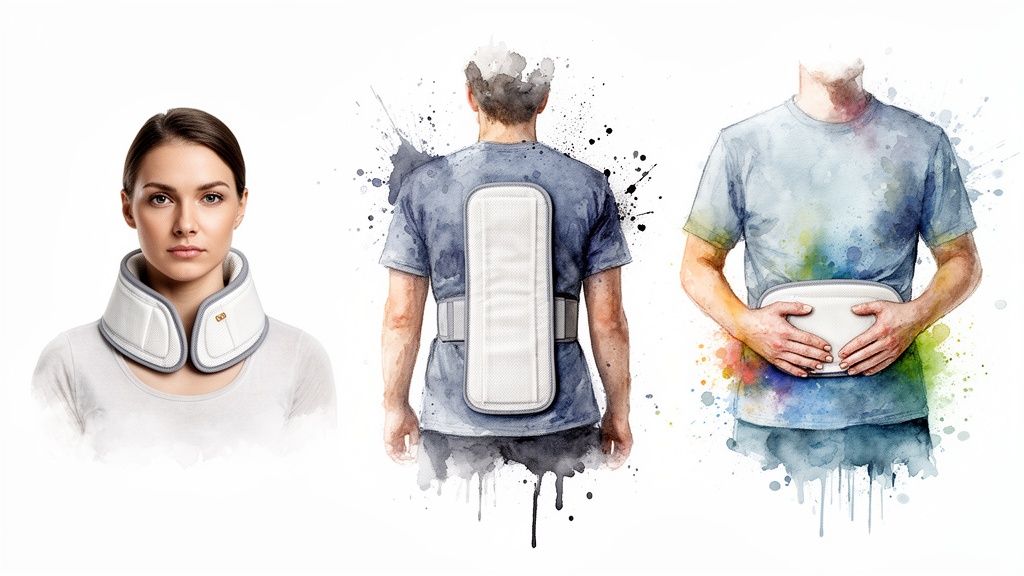
Think of it like using the right wrench for a specific bolt. Sure, an adjustable wrench might get the job done, but the perfectly sized socket wrench grips better, applies force more evenly, and works faster. A contoured heating pad does the same thing for your body—it provides better contact and more efficient relief than a generic rectangular one.
For Neck and Shoulder Tension
If you spend your days hunched over a desk, you’re no stranger to "tech neck" and the tense, knotted shoulders that come with it. This is where a U-shaped neck wrap becomes an absolute lifesaver. Its smart, ergonomic design drapes perfectly over your shoulders, funneling consistent warmth right into the trapezius muscles where we hold so much of our stress.
Here’s how it plays out: You just finished an eight-hour workday and your neck feels like a block of concrete. Instead of awkwardly trying to balance a flat pad, you pop a U-shaped wrap in the microwave for 90 seconds. You drape it over your shoulders and for the next 20 minutes, it’s delivering soothing, continuous heat to your entire neck and shoulder area while you make dinner or catch up on your favorite show.
For Lower Back Pain
Lower back pain calls for broad, steady coverage, which is why a long, rectangular pad is the go-to solution. These pads are specifically designed to span the entire lumbar region, giving you a wide area of soothing heat that can calm muscle spasms and dial down inflammation.
Even better, many of the best microwave heating pads for back pain come with an adjustable strap. This feature is a total game-changer, letting you secure the pad firmly in place. You're no longer stuck on the couch; you can move around, stretch, or even do light chores while getting targeted heat therapy. This constant application of warmth is the key to keeping those muscles relaxed and turning down the volume on pain signals.
For Menstrual Cramps and Abdominal Discomfort
When dealing with menstrual cramps, a versatile, medium-sized rectangular or square pad is your best friend. Its shape is ideal for resting over the lower abdomen, where its deep warmth helps relax the uterine muscles that are causing all that pain.
The combination of moist heat and the gentle, weighted pressure from a flaxseed-filled pad can be incredibly effective. This one-two punch works to increase blood flow and block pain perception, offering a drug-free alternative for period relief that many people find works faster and is more comforting than medication.
This same pad is also perfect for soothing general stomach aches or digestive discomfort, making it a multi-purpose staple for any wellness toolkit.
For Athletic Warm-Ups and Recovery
Heat therapy isn't just for aches and pains—it's a powerful tool for boosting performance and speeding up recovery. In fact, microwavable heating pads are now the fastest-growing segment in the global heating pad market, mainly because of their cordless convenience and fantastic heat retention. For athletes, warming up with these pads can be 15% faster and has been shown to reduce injury recurrence by 30%. You can explore the heating pad market report on cognitivemarketresearch.com to learn more about this trend.
Here’s how to put them to work for your fitness routine:
- Pre-Workout: Apply a warm pad to major muscle groups like your hamstrings or quads for 10-15 minutes before you start. This increases blood flow and makes muscles more elastic, helping you sidestep potential strains.
- Post-Workout: After your session, using heat helps flush out lactic acid and brings oxygen-rich blood to tired muscles. This speeds up the repair process and reduces that dreaded delayed onset muscle soreness (DOMS).
Using Your Heating Pad Safely and Effectively
A great heating pad can be a game-changer for aches and pains, but getting the most out of it—safely—comes down to using it the right way. It’s not complicated, but a few key steps will ensure you get all the therapeutic benefits without any of the risks.
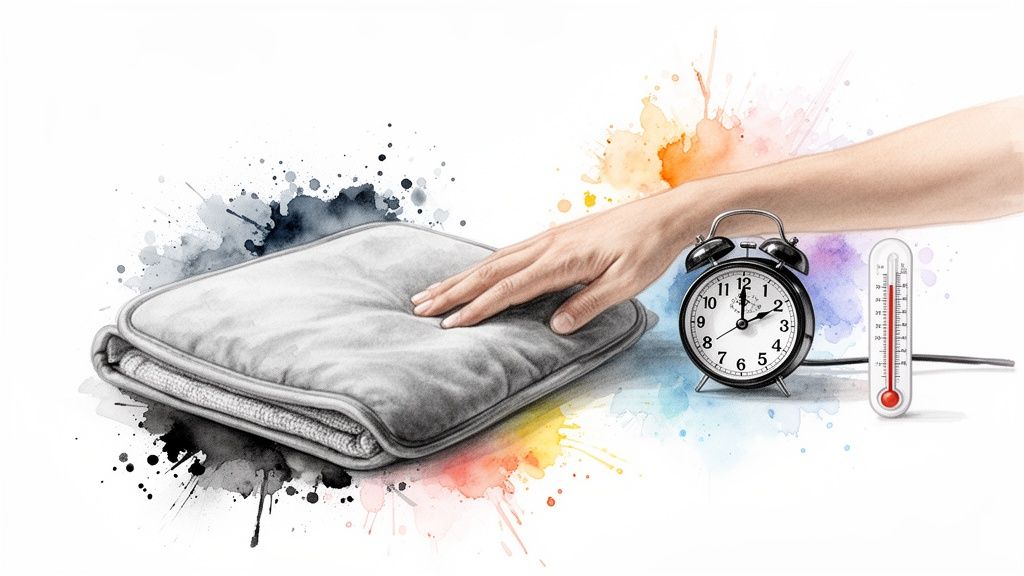
If there's one golden rule, it's this: never overheat your pad. Every pad is different, so you absolutely have to follow the manufacturer's instructions. The right timing depends on your microwave’s power and the pad's size and filling. Pushing it too long can scorch the contents, damage the fabric, and even create a fire hazard. A perfectly heated pad should feel deeply warm, not searing hot.
The Right Way to Heat and Apply
Getting started is simple. A good rule of thumb is to heat your pad in 30-second increments. After each interval, give it a quick touch test. Once it reaches a comforting warmth, you're good to go. If it feels too hot to hold comfortably, just let it sit and cool for a minute or two before putting it on your skin.
To avoid any chance of skin irritation or low-temperature burns, it’s smart to have a thin layer of clothing—like a t-shirt—between you and the pad. This little barrier helps the heat spread out gently and evenly.
For the best results, aim for a heat therapy session of about 15 to 20 minutes. That’s the sweet spot for boosting blood flow and helping muscles unwind. After your session, give the area a rest for at least an hour before you think about applying heat again.
Remember, the goal here is soothing relief, not blasting your muscles with intense heat. Your body is smart; if the heat is too high for too long, it goes into protection mode, which can actually cancel out the benefits you're after. Always listen to your body.
Caring for Your Pad for Long-Term Use
A little bit of care goes a long way in extending the life of your heating pad. Keeping it clean and storing it properly means it will be ready to go whenever you need it. The best pads come with removable covers you can toss right in the washing machine, which makes life a lot easier.
Just follow these simple steps:
- Washing the Cover: Pop the cover off and wash it in cold water on a gentle cycle. You can tumble dry it on low, but air drying is even better. Just make sure it's completely dry before putting it back on the inner pad.
- Spot Cleaning the Inner Pad: This is important: Never submerge the inner pad in water. The natural grain filler will be ruined. If you get a small spot on it, just dab it gently with a damp cloth and let it air dry completely.
- Proper Storage: When you're not using it, keep your heating pad in a cool, dry place away from sunlight, like a linen closet or a drawer. This protects both the fabric and the filling inside.
Following these guidelines will help you safely enjoy all the benefits of your heating pad. For an even deeper dive into best practices, check out our complete guide on heating pad safety.
Why Professionals and Families Trust SunnyBay
When you're looking for relief, the last thing you want to worry about is whether your heating pad is up to the task. Everything we've covered—from the quality of the filling to the cleverness of the design—is what separates a genuinely therapeutic tool from just another warm object. It’s not just about heat; it’s about creating something that delivers safe, reliable comfort you can truly count on.
For more than 20 years, SunnyBay has been the brand that professionals reach for first. Chiropractors and physical therapists don't just suggest our products to their patients—they use them in their own clinics every single day. They turn to SunnyBay because they know our pads, which are proudly made in the USA, are built to a higher standard of both therapeutic performance and durability.
A Commitment to Premium Quality
The real difference between an okay heating pad and a great one often boils down to what's inside. We’re serious about using only the best materials, which is why we fill our pads with natural, whole-grain flaxseed. This isn't just any filler; it's a premium choice that provides long-lasting moist heat and a gentle, weighted pressure that conforms perfectly to your body.
We then wrap that premium filling in incredibly soft, anti-pill fleece. This fabric was chosen for a reason. It's not just about the cozy feel; it's about durability. It's engineered to handle repeated trips to the microwave without pilling or losing that comforting texture, ensuring your pad remains a trusted wellness tool for years.
"A well-designed heating pad shouldn't just provide heat; it should become a seamless part of your self-care routine. It needs to be effective, easy to use, and built to last."
Thoughtful Designs for Real-Life Needs
We get it—pain relief shouldn't force you to put your life on pause. That’s why we’ve developed a whole range of products designed to fit how you actually live, from hands-free wraps that keep you moving to versatile body packs that deliver relief right where you need it.
- For the Active Individual: Our hands-free neck wraps and lower back pads come with straps, letting you enjoy soothing heat therapy while you’re working, cooking, or just moving around the house. No more being stuck in one spot.
- For the Whole Family: Check out our value bundles. They’re perfect for households where aches and pains are a fact of life. With a mix of shapes and sizes, there’s a pad ready for anything from a child’s growing pains to a grandparent’s stiff joints.
This blend of professional-grade quality and user-focused design is what has made SunnyBay a staple in clinics and homes alike. We believe that simple, effective, drug-free pain management should be accessible to everyone. By insisting on superior materials and practical designs, we’re able to deliver on that belief, helping you and your family get back to doing what you love.
Got Questions? We've Got Answers
Stepping into the world of heat therapy can spark a few questions. To make sure you feel completely comfortable and confident using your new heating pad, we’ve put together some straightforward answers to the questions we hear most often.
Think of this as a quick-start guide to address any lingering "what ifs." We'll cover everything from how long the warmth lasts to safety tips, so you can get the most out of your pain relief tool and start feeling better, faster.
How Long Does the Heat Last in a Microwave Pad?
You can expect a well-made microwave heating pad to deliver therapeutic heat for about 20-30 minutes. Pads filled with high-quality materials like flaxseed are especially good at holding that soothing warmth.
This timeframe isn't accidental—it's right in the sweet spot for a heat therapy session. It’s long enough to relax tight muscles and get the blood flowing where you need it, but without the risks that come from too much heat exposure. The slow, natural cooling process is actually a built-in safety feature, preventing you from overdoing it.
Are Microwave Heating Pads Safe to Use While Sleeping?
This one is a hard no. You should never sleep with a microwave heating pad. The warmth is most intense right out of the microwave and can cause skin irritation or even mild burns if left on one spot for hours while you're asleep.
The best practice is to use your pad for 15-20 minutes at a time while you're awake and can pay attention to how your skin feels. This way, you stay in control and keep your well-being the top priority.
Can I Add My Own Essential Oils to an Unscented Pad?
It's tempting, but we strongly advise against putting essential oils directly on the fabric of your heating pad. For one, many oils are flammable, which is a clear safety risk when mixed with a microwave. They can also be potent on the skin, and adding heat and pressure into the mix can lead to irritation.
If you’re craving a little aromatherapy with your heat session, you have a couple of much safer options:
- Choose a pad that’s already infused with natural herbs like lavender.
- Run an essential oil diffuser in the room while you relax with your pad.
What Should I Do If My New Heating Pad Has a Smell?
When you first start using a pad filled with natural grains like flaxseed or rice, you might notice a faint, earthy, or almost "nutty" scent. This is totally normal! It’s just the natural oils in the filler reacting to the heat, and it will disappear after the first few uses.
What you do want to watch out for is a burnt or sharp, unpleasant odor. If you smell anything like that, stop using the pad right away—it's a sign that it got overheated. Stick to the manufacturer’s heating instructions to the letter to keep the filling from getting scorched.
At SunnyBay, our goal is simple: to provide safe, effective pain relief you can count on. All our microwave heating pads are made right here in the USA. We invite you to explore our collection and find the perfect partner to help you get back to doing what you love. Learn more at https://sunny-bay.com.


