


Are heating pads safe: A Practical Guide to Safe Heat Therapy
-
Let's get straight to the point: Yes, heating pads are generally safe and can be a fantastic tool for pain relief—as long as you use them correctly. Like any therapeutic tool, misuse can turn it from a source of comfort into a genuine hazard. Knowing the right way to use one is everything.
The Soothing Power of Heat Therapy
Ever wonder how a little warmth can make such a big difference? This incredible process is called thermotherapy, and it's a powerful way to tap into your body’s natural healing systems. Heat therapy isn't just about feeling cozy; it's about actively promoting recovery and melting away pain.
When you apply heat to a sore, tight spot, you're giving your blood vessels the green light to widen. This widening, known as vasodilation, boosts blood flow to the area, delivering a fresh supply of oxygen and nutrients right where your tissues need it most. Imagine a knotted-up muscle in your shoulder after a stressful day. Applying heat is like opening up a clogged highway, letting healing traffic flow freely to that exact spot.
This rush of circulation also helps flush out metabolic waste, like the lactic acid that builds up after a tough workout and causes that familiar ache. At the same time, the comforting sensation of warmth on your skin actually helps block pain signals from reaching your brain. It's a simple, elegant, and effective way to find drug-free relief.

Unlocking the Benefits of Heat and Massage
The benefits don't stop at simple pain relief. When you pair heat with a bit of gentle massage therapy, you really start to see the magic happen. The warmth from the heating pad acts as the perfect "warm-up" for your muscles, making them more pliable and receptive to massage. This combination allows you to work out deep-seated knots and restore flexibility much more effectively.
Here are a few real-world examples of how this powerful duo can help you:
- Eases Muscle Soreness: After a day of gardening, your lower back is screaming. A 15-minute session with a heating pad will loosen those tight muscles, preparing them for a gentle self-massage that can release deep-seated tension before it becomes a chronic ache.
- Reduces Joint Stiffness: Do you wake up with stiff, arthritic hands? Applying a warm compress can make those first movements of the day so much easier. The heat improves circulation and reduces the stiffness, restoring a bit of your morning mobility.
- Promotes Deep Relaxation: After a long day hunched over a desk, a warm neck wrap can feel like a mini-retreat. The heat melts away the initial tension, helping to lower stress levels—a huge win, since stress itself is a major contributor to muscle tightness.
By understanding both the immense benefits and the potential risks, you empower yourself to use heat therapy not just effectively, but with complete confidence.
Before we get into the nitty-gritty of different heating pad types and specific risk factors, it's good to have a quick reference guide. The table below lays out the foundational safety principles we'll be covering, giving you an at-a-glance look at best practices.
Heating Pad Safety At a Glance
Here’s a quick overview of key safety principles for using any heating pad for pain and muscle relief.
| Safety Principle | Why It's Critical | Actionable Tip |
|---|---|---|
| Limit Your Time | Prolonged exposure can cause skin burns, even at lower temperatures. The risk of tissue damage increases the longer heat is applied. | Set a timer for 15-20 minutes per session. Never fall asleep with a heating pad turned on. |
| Watch the Temperature | High heat settings can cause first- or second-degree burns, especially on sensitive skin or with impaired sensation. | Always start on the lowest setting to see how your skin reacts. Avoid the highest settings entirely. |
| Use a Barrier | Direct contact between the heating element and your skin greatly increases the risk of burns and skin irritation. | Place a towel, blanket, or the heating pad's cloth cover between the pad and your skin. |
| Check Your Skin | Your body provides visual cues if the heat is too intense. Ignoring them can lead to injury. | Periodically check your skin for excessive redness, blistering, or irritation during and after use. |
| Inspect Your Pad | Damaged cords, frayed wires, or cracks in electric or microwavable pads can pose fire or burn hazards. | Before every use, look over your heating pad for any signs of wear and tear. Discard if damaged. |
| Avoid Pressure | Lying directly on a heating pad can trap heat, concentrate it in one spot, and increase the risk of deep tissue burns. | Place the heating pad on top of the affected area rather than lying on it. |
Keep these core rules in mind as we explore the different types of heating pads and who needs to take extra precautions. They are the foundation for safe and effective pain relief.
Exploring the Different Types of Heating Pads
Not all heating pads are the same. In fact, think of choosing one like picking the right tool for a job—each type has its own way of working, along with its own set of benefits and potential pitfalls. Getting to know the three main players is the first step toward using them safely and getting the relief you need.
Electric Heating Pads
Your classic electric heating pad is essentially a mini electric blanket designed for targeted comfort. You plug it in, and an internal heating element delivers a steady, consistent warmth. Most come with adjustable temperature settings, which is why they’re a go-to for anyone needing long, uninterrupted heat therapy sessions.
But that constant electrical power can also be their biggest weakness. An old or damaged pad isn't just ineffective; it can be dangerous. According to the Electrical Safety Foundation International (ESFI), heating pads and electric blankets are linked to nearly 500 fires each year. Here's the kicker: a staggering 99% of those incidents involve products over 10 years old. Over time, wires can fray and temperature controls fail, turning a source of comfort into a serious hazard.
This is the core trade-off with any heating pad: balancing soothing relief with potential risks like burns or fire.
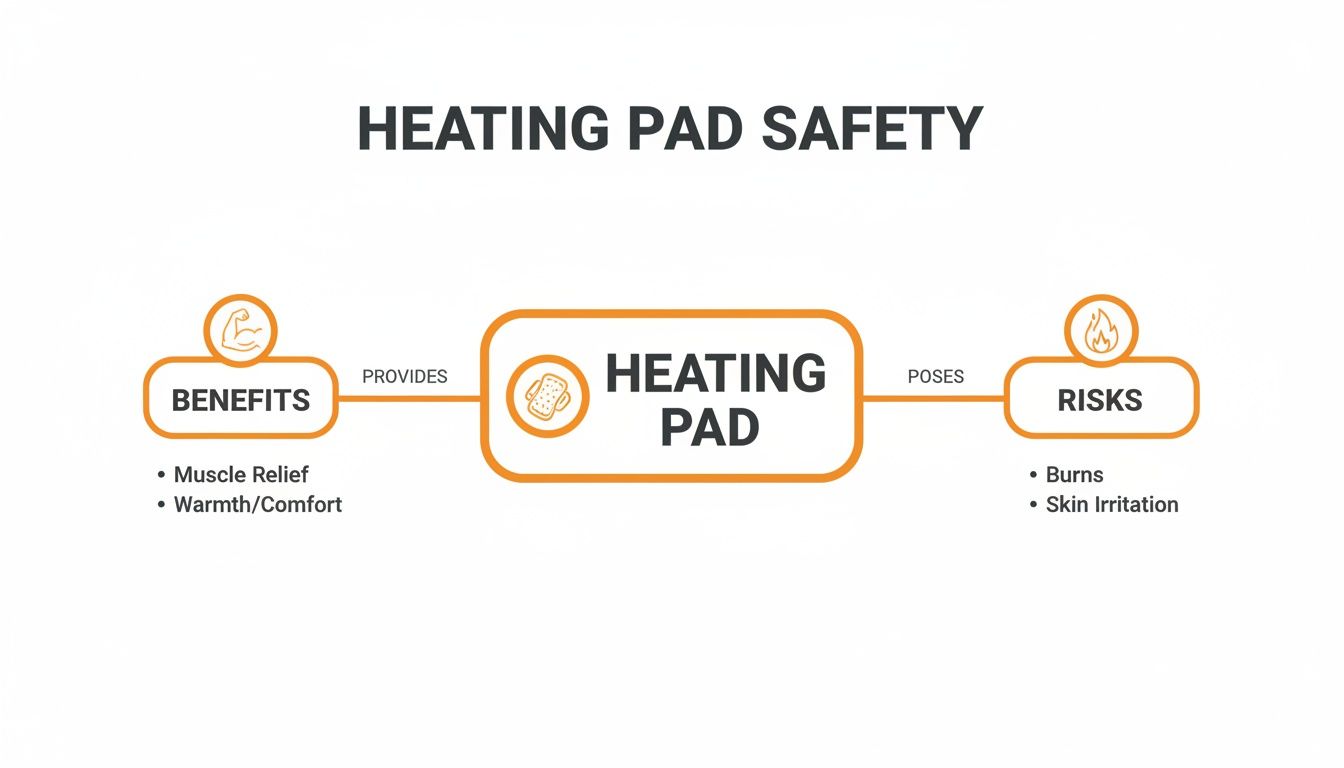
As you can see, the goal is always to maximize the therapeutic benefits while minimizing any chance of harm.
Microwavable Heating Pads
Next up are microwavable heating pads, which take a more natural approach. Instead of wires, they’re filled with materials that hold heat exceptionally well, like flax seeds, rice, or special clay beads, all tucked inside a soft fabric pouch. A minute or two in the microwave is all it takes to get them ready.
Think of them as a modern, reusable version of a warm compress. They provide a gentle, moist heat that many find sinks deeper into muscles than the dry heat from electric models. Best of all, they're completely cordless. You’re free to move around—walk through the kitchen, relax on the couch, or get comfortable in bed without being tethered to a wall outlet. It’s a huge plus.
The only real watch-out is overheating. Zapping them for too long can damage the filling or even scorch the fabric. Just be sure to follow the manufacturer's instructions to the letter, and you'll avoid any risk of burns. If you want to dive deeper, you can explore our guide on the types of heating pads.
Disposable Chemical Heating Pads
Finally, we have the on-the-go champs: disposable chemical heating pads. These single-use packets are perfect for convenience. They work through a clever chemical reaction—just open the package, expose the contents to the air, and an exothermic process begins, creating warmth.
They're small, adhesive, and easy to stick onto your clothing for hours of relief during a long drive or a cold day outdoors.
The real magic behind heat therapy is vasodilation. The warmth widens blood vessels, boosting circulation to the sore area. This influx of blood delivers fresh oxygen and nutrients for healing while carrying away pain-causing byproducts like lactic acid.
While these pads are incredibly handy, the main risk is skin irritation. They’re designed to be stuck over clothing, never directly on your skin. If a packet were to break open, the chemical contents could cause a reaction.
By understanding how each of these heating pads works, you're in a much better position to pick the right one. Whether you need steady, controllable warmth, natural moist heat, or portable relief, there’s a safe and effective option out there that fits your life perfectly.
Understanding the Hidden Risks: Burns and Fires
That soothing warmth from a heating pad can feel like a miracle for sore muscles, but it's easy to forget you're using an appliance that needs respect. The comfort they bring can sometimes make us complacent, but if you're not careful, two major risks are waiting in the wings: burns and house fires. Getting to know how these happen is the best way to make sure your heat therapy is both safe and effective.
The most common—and sneakiest—danger is a thermal burn. We tend to think of burns as happening instantly from something scorching hot, but a slow, low-temperature burn is a very real, and serious, concern. This happens from prolonged contact, even on a low setting. It can lead to a skin condition called erythema ab igne, which leaves behind a mottled, rash-like pattern from damaged blood vessels just beneath the skin's surface.
This is exactly why falling asleep with a heating pad on is one of the biggest mistakes you can make. Imagine drifting off with the pad pressed against your back. You won't feel any immediate pain, but after hours of uninterrupted heat, you could wake up to severe tissue damage. This kind of "slow-and-steady" burn is often more dangerous than a quick touch of a hot stove because there's no sharp, instant pain to warn you.
When Comfort Turns into a Burn Risk
The chance of getting burned by a heating pad isn't just a hypothetical warning; it's a documented problem. The data shows a worrying trend where these comfort-giving devices are causing injuries that are entirely preventable.
According to the US Consumer Product Safety Commission, the number of annual burns from electric heating pads jumped by 33.9% over a ten-year period, climbing from 1,600 cases to 2,142. That increase really drives home how often misuse turns a helpful tool into a hazard.
So, when we ask, "are heating pads safe," the answer involves looking at real-world numbers like these and committing to using them more mindfully.
The Overlooked Danger of House Fires
Beyond the risk of personal injury, electric heating pads—especially older or well-used models—can become a serious fire hazard. Think about how we use them: they get folded, rolled up, and stuffed in a closet. Over time, that can cause the internal wiring to fray or break down.
This damage creates "hot spots" that can overheat, melt through the pad's fabric, and easily ignite bedding, a sofa, or a rug. A faulty plug or a busted temperature controller can lead to the same disastrous outcome. Because we use heating pads in our coziest spots, they're almost always surrounded by flammable materials, making even a tiny electrical spark a huge danger.
"A heating pad is a simple tool, but it's still an electrical appliance. Treating it with the same caution you would any other household device is essential for preventing burns and fires."
Your safety mindset shouldn't stop with the pad itself. Knowing some essential tips for general home fire safety provides another layer of protection for you and your family.
Real-World Scenarios and How to Avoid Them
To bring these risks to life, let’s look at a couple of all-too-common situations:
- Scenario 1: The Sleeper. A person with chronic back pain uses their heating pad to find relief at night and accidentally falls asleep with it tucked under their back. The trapped heat intensifies overnight, causing a deep second-degree burn that they don't even discover until they wake up in agony.
- Scenario 2: The Old Faithful. Someone continues to use their trusty heating pad of ten years, even though the cord is visibly cracked and frayed. One evening, the worn wiring shorts out. The pad begins to smolder and sets fire to the armchair it was left on, quickly turning into a small house fire.
These examples aren't meant to frighten you away from using a heating pad. They're meant to empower you. By seeing the clear dangers, you can adopt simple habits to stay safe. Never, ever sleep with an electric pad on, always give your device a quick inspection before plugging it in, and make sure there’s a protective layer between the pad and your skin. These small steps make all the difference, turning a potential hazard back into a reliable source of comfort.
When to Be Extra Cautious with Heat Therapy
Heat therapy is a fantastic tool for soothing sore muscles and easing stiffness, but it isn't a one-size-fits-all solution. For most people, it's a safe and simple comfort measure. But certain health conditions and life stages change the game entirely, making it critical to understand the risks.
Think of your nervous system as your body's built-in smoke detector. It’s supposed to sound the alarm when something gets too hot. For some people, though, that alarm system is faulty, meaning they can’t feel a burn developing until serious damage has already been done. That's where the real danger lies.
Individuals with Diabetes or Neuropathy
If you or a loved one lives with diabetes or peripheral neuropathy, the risk from heat application is especially high. These conditions often cause nerve damage (neuropathy), particularly in the hands and feet, which numbs sensation. You could easily place a heating pad on an aching foot and have no idea it’s dangerously hot because the nerves that should be screaming "it's burning!" are silent.
This isn't a minor concern—it can lead to devastating injuries. A startling study on patients with diabetic neuropathy revealed just how severe the danger is. In the study, 16 individuals suffered serious burns from heat therapy. The fallout was grim: many developed infections (44%), needed ICU care (6%), and some even required amputations (19%). You can learn more from the original study on diabetic neuropathy and heat application risks. The takeaway is crystal clear: if you can't trust your own body to feel the heat, you absolutely cannot trust an electric heating pad that stays hot indefinitely.
Safety Tip: For anyone with reduced sensation, a high-quality microwavable heating pad is a much safer bet. It provides a burst of controlled, moist heat that naturally and gradually cools down, dramatically lowering the risk of a slow, unnoticed burn.
Other Vulnerable Groups Who Need to Be Careful
Beyond nerve damage, several other factors can make a person much more susceptible to heat-related injuries. It's crucial to keep these situations in mind for yourself or when caring for family.
Pregnant Women During pregnancy, the main rule is to avoid raising your core body temperature, as it can pose a risk to the developing baby. While localized heat on your lower back or sore hips is generally considered fine, you should never place a heating pad directly on your abdomen. It’s also wise to steer clear of anything that raises your overall body heat, like saunas or hot tubs. For targeted pain relief, always talk to your doctor first and keep heat sessions short—around 15 minutes at a time. For a deeper dive, check out our guide on using heating pads safely during pregnancy.
Infants and Young Children A child’s skin is significantly thinner and more delicate than an adult's, making them incredibly prone to burns. Plus, they can't always tell you that something feels too hot until it's too late. You should never use a standard heating pad on an infant or leave a young child alone with one.
Seniors As we get older, our skin naturally thins and becomes more fragile. Many seniors also deal with reduced circulation or a gradual loss of sensation, much like those with neuropathy. This combination puts them at a much higher risk for burns, especially from an electric pad left on for too long.
Making a Safer Choice for Loved Ones
When you're caring for someone in a high-risk group, the type of heating pad you choose makes all the difference.
- Avoid Electric Pads Overnight: Never, ever let a vulnerable person fall asleep with an electric heating pad plugged in. The risk of severe burns from prolonged, constant heat is just too great.
- Opt for Controlled Heat: Microwavable pads, like those from SunnyBay, offer a far safer alternative. They deliver soothing, moist heat for a predictable amount of time before they start to cool, eliminating the danger of continuous, unattended heat.
- Always Supervise: Whether it's a child, an elderly parent, or anyone with cognitive impairments, direct supervision is non-negotiable when using any form of heat therapy.
- Consult a Doctor: Before starting any new heat therapy routine, especially if there's a pre-existing health condition, having a conversation with a healthcare provider is the single most important safety step you can take.
By knowing when to be extra cautious, you can get all the benefits of heat therapy while keeping yourself and the people you care about safe from harm.
Your Essential Checklist for Safe Heating pad Use
Knowing the risks is one thing, but putting that knowledge into practice is what really keeps you safe. Let's walk through the must-knows for worry-free pain relief. Think of these as the fundamental rules of the road for using any heating pad, ensuring you get all the soothing benefits without any of the dangers.
Following these tips transforms your heating pad from just another appliance into a reliable therapeutic tool. You'll be able to tackle those aches and pains with complete confidence.
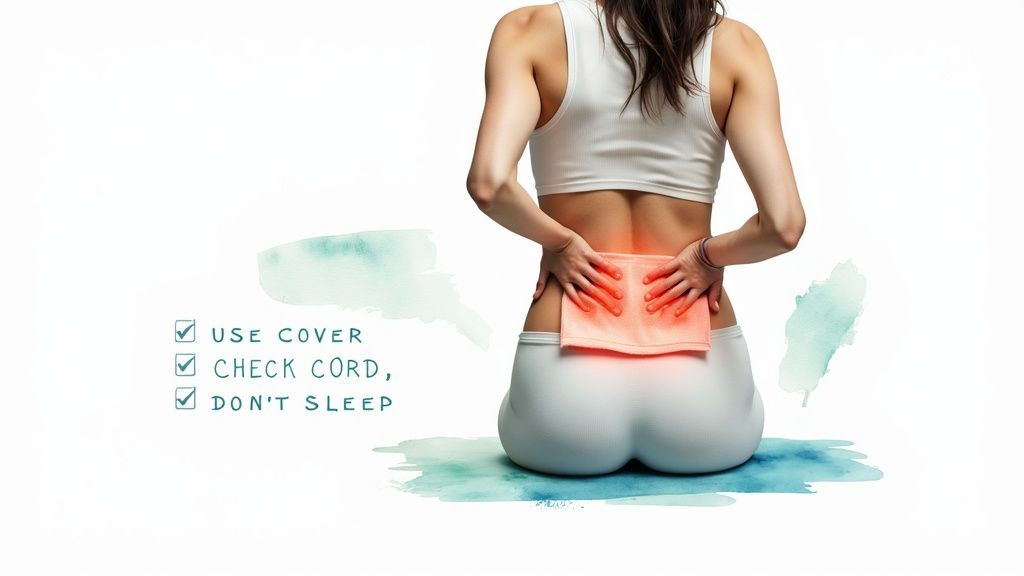
Master the 15-20 Minute Rule
If you remember only one thing, make it this: respect the clock. Leaving a heating pad on for too long, even at what feels like a comfortable temperature, can lead to burns and skin damage. To prevent this, you have to stick to a firm time limit.
Set a timer for 15 to 20 minutes, then take it off and give your skin a rest. That’s plenty of time to boost blood flow and relax tight muscles without pushing your skin past its limit. It’s the perfect sweet spot between effective relief and smart safety.
Always Use a Protective Barrier
This one is non-negotiable. Never, ever place a heating pad directly on your bare skin. It’s the single easiest way to reduce your risk of getting burned, as direct contact can concentrate the heat in one spot and quickly cause an injury.
A simple layer of fabric is all it takes to stay safe.
- For electric pads: The cloth cover it came with is perfect. If you’ve lost it, a thin, dry towel will do the trick.
- For microwavable pads: The fabric pouch itself usually serves as a barrier, but if you have sensitive skin, an extra layer of cloth is a great idea.
This little step diffuses the heat, letting it sink into your muscles gently and evenly. For instance, if you’re treating a sore shoulder, just place the pad right over your t-shirt.
Never Use the Highest Heat Setting
I get it—when you're in pain, it's tempting to crank the heat all the way up for faster relief. But the highest setting is almost always too intense for your skin and can cause redness, irritation, or even a first-degree burn before you notice.
Always start on the lowest setting to see how your skin reacts. You can slowly turn it up to a level that feels comfortably warm, not hot. The goal here is soothing warmth, not scorching heat. When it comes to temperature, more is definitely not better.
Proper Placement Prevents Trapped Heat
Where you put the heating pad matters just as much as how long it’s on. A common mistake people make is lying down on top of an electric heating pad. Doing so traps the heat between your body and the mattress or sofa, which stops it from escaping and can make it dangerously hot.
By placing the heating pad on top of your body instead of underneath it, you allow heat to radiate away naturally. This simple change prevents dangerous heat concentration and significantly lowers your burn risk.
So, if your lower back is aching, try lying on your stomach and placing the pad on top of your back. This lets the excess heat dissipate safely into the air.
Inspect Your Pad Before Every Use
Before you plug in that electric pad or pop a microwavable one in to heat, give it a quick visual check. This two-second habit can be the difference between relief and a serious accident.
Be on the lookout for these red flags:
- Cracked or frayed electrical cords on electric models.
- Dark, scorched-looking spots on the fabric of any pad.
- A weird plastic or "burning" smell when it’s on.
- Leaks or tears in microwavable pads that could let the filling out.
If you see any of these signs, it’s time for a new heating pad. Answering the question "are heating pads safe" always starts with making sure your device is in good working order. Microwavable pads, for example, have to be heated correctly to avoid damage. You can find specific instructions in our guide on how long to microwave a heating pad.
Final Crucial Rules for Safety
To wrap up your safety checklist, here are a few more critical rules for specific situations. Keep these in mind, and you'll ensure your experience with heat therapy is always a good one.
- Never fall asleep with an electric pad. The risk of burns from prolonged contact is simply too high. If there’s a chance you might doze off, make sure your pad has a reliable auto-shutoff feature, or better yet, use a microwavable one that cools down on its own.
- Avoid using on broken skin. Heat should never be applied to open wounds, rashes, or fresh injuries that are swollen. Heat boosts blood flow, which can actually make inflammation worse in these cases.
- Listen to your body. If your skin starts looking bright red or feels uncomfortably hot, take the pad off immediately. That’s your body giving you a clear warning sign—don’t ignore it.
When you’re in the market for a new heating pad, a little bit of know-how goes a long way. Thinking about safety from the very beginning is your best bet for avoiding accidents and getting the most out of your heat therapy.
It's about making a smart choice right at the store shelf (or online checkout). Whether you’re leaning toward an electric model or a microwavable one, a few key features are simply non-negotiable for safe, effective relief.
What to Look for in an Electric Heating Pad
Think of an electric heating pad like any other appliance you plug into the wall—you want proof that it’s built to be safe. Third-party certifications are the gold standard here, showing the product has been properly tested.
- Safety Certifications: Always check the packaging for labels from UL (Underwriters Laboratories) or ETL (Intertek). These marks mean the pad has passed strict, independent safety evaluations.
- Auto-Shutoff Timer: This is probably the single most important safety feature. A timer that automatically turns the pad off after a set period is crucial for preventing burns, especially if you happen to fall asleep.
- A Sturdy Cord: Give the power cord a good look. It should feel thick and durable, not flimsy. A well-insulated, flexible cord is far less likely to fray or become an electrical hazard down the road.
Choosing a Quality Microwavable Pad
If you prefer the cord-free convenience of a microwavable pad, the quality of its construction is everything. The right materials are what separate a safe, soothing experience from a potential hazard.
Pay close attention to the fabric. You want high-quality, non-flammable materials like 100% cotton that can handle the heat of a microwave without scorching. The filling is just as important. Natural fillings like flaxseed or clay beads are fantastic because they retain moist heat effectively and release it slowly and evenly. That’s why brands like SunnyBay focus on clinic-grade construction—it ensures the pad is durable, safe, and performs consistently every time.
If your current heating pad is showing its age—maybe the cord is cracked, the heat feels patchy, or you see scorch marks—it's time to retire it. Don't take the risk. Replacing it immediately is the only way to prevent the serious fire and burn hazards we talked about.
By keeping these features in mind, you'll be able to confidently pick a heating pad that not only eases your pain but also gives you total peace of mind.
Common Questions About Heating Pad Safety
As we've covered the ins and outs of heating pad safety, a few common questions always pop up. Let's tackle them head-on so you can feel completely confident using heat therapy.
Is It Safe to Sleep with a Heating Pad?
This is a hard no. You should never sleep with an electric heating pad turned on. The risk of deep, serious burns is just too high when the heat is constant and you can't feel it getting too hot. The pad can easily get trapped under your body, concentrating the heat to dangerous levels.
If you're looking for overnight warmth, a much safer bet is a microwavable pad that will naturally lose its heat over time.
Can a Heating Pad Help with Period Cramps?
Absolutely, and it's one of the best drug-free ways to find relief. Placing a warm heating pad over your lower abdomen helps relax the contracting uterine muscles that cause cramps in the first place.
Even 15-20 minutes of gentle warmth can make a world of difference when you're dealing with menstrual pain.
Heat therapy is a powerful ally against pain, but its benefits are unlocked through mindful and safe application. It’s not just about turning it on; it’s about using it as a deliberate, controlled tool for wellness.
What’s Better, Heat or Ice for Pain?
This is the classic question, and the answer really depends on what kind of pain you're treating. They work in opposite ways, so you need to match the therapy to the injury.
-
Ice is for new injuries (think first 48 hours). If you have a fresh sprain, strain, or swelling, ice is your friend. It constricts blood vessels to reduce inflammation and numbs the area.
-
Heat is for chronic pain and muscle stiffness. For those lingering aches, old injuries, or tight muscles with no swelling, heat is the way to go. It boosts circulation, bringing more oxygen to the area and helping the muscles relax.
Knowing when to reach for the ice pack versus the heating pad makes your pain management plan so much more effective.
Ready to experience safe, clinic-grade heat therapy at home? The microwavable wraps from SunnyBay are designed with high-quality materials for gentle, long-lasting warmth without the risks of electric pads. Explore the collection and find your perfect drug-free pain relief solution at https://sunny-bay.com.


