


Are Heat Pads Safe? A Guide to Using Them Effectively
-
So, are heat pads safe? The short answer is a resounding yes—but with a few important ground rules. Think of a heat pad like any other effective tool in your wellness kit. It’s fantastic for melting away muscle soreness and easing chronic aches, but it needs to be used with respect to avoid any risks. When you understand how to use them, heat pads are more than just safe; they're an incredibly powerful tool for natural pain relief.
The Benefits of Heat Therapy and Safe Practices
Heat therapy, which you might hear called thermotherapy, is a time-tested way to manage pain and stiffness. That deep, comforting warmth you feel spreading across a sore back or tight shoulder is actually kicking off a powerful biological process. The heat causes your blood vessels to dilate, which ramps up circulation and sends a fresh wave of oxygen and nutrients to your tissues.
This increased blood flow does two great things: it helps flush out the metabolic byproducts that make you feel sore, and it coaxes tight muscle fibers to relax, improving your flexibility.
Ever get that tight, knotted feeling in your neck after a long day at your desk? Applying a warm compress for just 20 minutes can feel like an instant reset, dissolving the tension and helping you move freely again. It’s a wonderfully simple, drug-free method for supporting your body's own healing power.

Why Safety Is Non-Negotiable
As great as they are, using a heat pad incorrectly can lead to problems like skin irritation, burns, or even fire hazards with older or damaged electric models. The whole point of this guide is to give you the confidence to use heat therapy effectively, so every session is both a relief and completely safe.
The goal of heat therapy is to soothe and heal, not to cause harm. By learning the fundamental safety guidelines, you can harness the full power of warmth without any of the worry.
To get started, here's a quick overview of the essential rules for safe heat pad use. Consider this your go-to checklist before you settle in for a session. We'll dive deeper into each of these points throughout the guide, explaining not just what to do, but why it's so crucial for your well-being.
Heat Pad Safety At a Glance
| Safety Principle | Guideline | Why It Matters |
|---|---|---|
| Set a Timer | Limit sessions to 15-20 minutes. | Prevents overheating skin and the potential for low-temperature burns from prolonged exposure. |
| Use a Barrier | Always place a towel or cloth between the heat pad and your skin. | This creates a protective layer to distribute heat evenly and prevent direct contact burns. |
| Inspect Your Pad | Check for damage, frayed cords, or leaks before every use. | It ensures your device is in safe working order and reduces the risk of electrical faults or fires. |
| Avoid Sleeping | Never fall asleep with a heat pad on. | Your sensitivity to heat drops dramatically during sleep, which greatly increases the risk of serious burns. |
These core principles are the foundation for using any heat pad safely and effectively. Keeping them in mind will let you focus on what matters most: feeling better.
How Heat Therapy Works With Your Body to Relieve Pain
Ever wondered what's actually happening when a warm heat pad melts away your aches and pains? It's not just a comforting sensation; it’s a powerful biological response that kickstarts your body's own healing mechanisms. When a muscle is sore, it's often tight and constricted, which can feel like a microscopic traffic jam inside your body.
Picture the blood vessels in your aching back as tiny, clogged side streets. This bottleneck traps metabolic byproducts, like lactic acid, that are notorious for causing that familiar feeling of pain and stiffness. At the same time, it stops fresh, oxygen-rich blood from getting to where it's needed most.
When you apply a heat pad, you're essentially acting as a traffic controller, opening up all the lanes. The warmth causes your blood vessels to expand in a process called vasodilation. Suddenly, those congested streets become superhighways, letting nutrient-rich blood rush into the tissue.
This surge of circulation is a game-changer. It delivers the building blocks your body needs to repair damaged muscle fibers and, just as crucially, it flushes out all the junk that was causing irritation. That's why heat therapy doesn't just put a band-aid on the pain—it genuinely helps the healing process along.
The Science Behind the Soothing Sensation
This boost in blood flow brings a one-two punch of benefits that work together to get you moving again.
- Relaxing the Muscles: The warmth has a direct effect on muscle fibers, helping them loosen their grip. It’s a lot like warming a stiff piece of clay in your hands to make it soft and pliable—your muscles react in a similar way. This eases those painful spasms and melts away tension.
- Improving Flexibility: Once your muscles relax, your overall flexibility naturally improves. A stiff neck that barely turns can regain its full range of motion, and a tight lower back feels less locked up. You can simply move with more freedom and less pain.
If you're interested in the finer details, you can learn more about understanding the basics of heat therapy and how to apply it to different kinds of pain. It really helps you appreciate how powerful this simple tool can be.
A Perfect Partner: Heat and Massage
This is where you can really amplify the benefits. Pairing heat therapy with massage is a fantastic way to double down on relief. Try applying a heat pad for about 15-20 minutes right before a massage. This preheats the muscle tissue, making it far more responsive to treatment.
For instance, imagine you have a deep, persistent knot in your shoulder. A massage therapist might have to spend a lot of time and pressure trying to work it out. But if you apply a heat pad first, the muscle is already relaxed and pliable. The therapist can then work more deeply and effectively, releasing the knot with less effort and less discomfort for you. It turns a good massage into a great one.
By using a heat pad before stretching or a massage, you’re essentially giving your body a head start on healing. The muscles are already relaxed and flooded with blood, making any subsequent therapy more effective.
Beyond just tackling aches, knowing how heat works can be a huge asset for anyone with an active lifestyle. For more tips on post-workout recovery, check out these expert-recommended strategies to reduce muscle soreness and recover faster.
Ultimately, understanding the "why" behind heat therapy shows you that using a heat pad safely is about more than just preventing burns. It's about tapping into your body's incredible natural systems to reduce pain, restore mobility, and simply feel better.
Choosing the Right Heat Pad for Your Needs
When it comes to picking a heat pad, it's about more than just grabbing the first one you see. The right choice really comes down to your lifestyle, the kind of relief you’re after, and what makes you feel safest. Think of it this way: not all heat pads are built the same, and each one offers a totally different experience in how it delivers soothing warmth.
The big three you'll find are electric, microwavable, and disposable pads. Getting to know the real-world differences between them is the key to finding a safe and effective sidekick in your fight against aches and pains. This simple decision tree can help you start thinking about what's right for you.
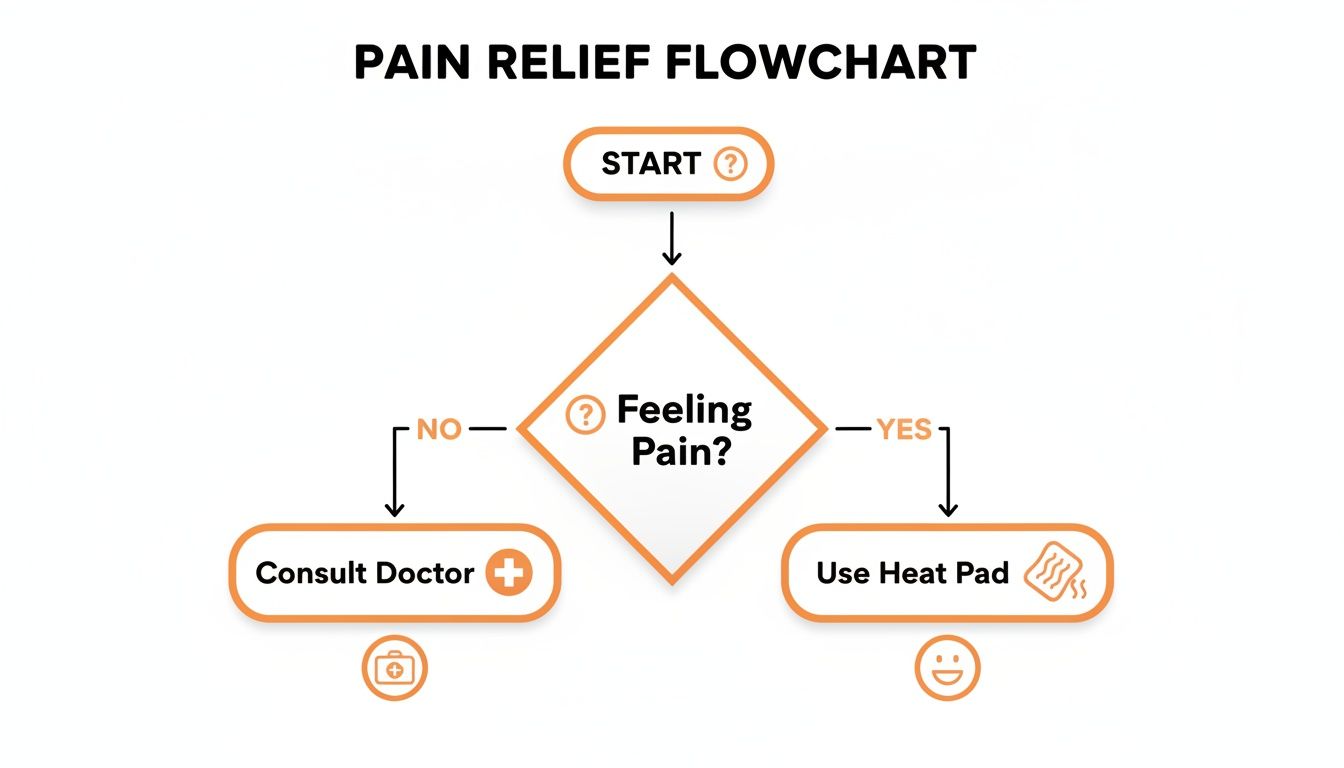
As the flowchart shows, for many of us dealing with common pain, a heat pad is often the first and most logical step. It’s an easy, at-home solution to try before deciding if you need to call a doctor.
To really get into the details, let's compare the most common types side-by-side.
Electric vs. Microwavable vs. Disposable Heat Pads
| Feature | Electric Heat Pads | Microwavable Heat Pads | Disposable Heat Pads |
|---|---|---|---|
| Heat Source | Internal heating coils | Heated in microwave | Air-activated chemical reaction |
| Heat Type | Dry, consistent heat | Moist, penetrating heat | Low-level, gentle dry heat |
| Adjustability | Multiple settings | None (gradually cools) | None (fixed temperature) |
| Portability | Limited by cord length | Excellent (cord-free) | Excellent (small and adhesive) |
| Best For | Sustained, targeted relief for chronic pain | Deep muscle relaxation, cramps, stiffness | All-day mild relief, travel, office use |
| Key Safety Feature | Auto-shutoff timer | Gradual cooling | Low, fixed temperature |
| Main Risk | Electrical malfunction, fire (especially older units) | Overheating, hot spots | Skin irritation from adhesive |
| Reusable? | Yes | Yes | No (single-use) |
This table gives you a quick snapshot, but let's dig a little deeper into what these differences mean for your safety and comfort.
Electric Heat Pads: The Consistent Choice
Electric heat pads are a go-to for many because they deliver reliable, adjustable warmth with just the flip of a switch. Most modern ones include vital safety features like multiple heat settings and an auto-shutoff timer—a lifesaver if you happen to drift off while using one. This makes them a solid choice for long-lasting, controlled heat.
But that convenience comes with a catch. The biggest worry is always the risk of an electrical issue or fire. In the U.S., heating pads and electric blankets are linked to nearly 500 fires each year, and almost all of them involve products that are more than 10 years old. It’s a stark reminder that age and wear can turn a comfort tool into a danger. For a deeper dive, the Electrical Safety Foundation International offers some great information.
Microwavable Heat Pads: The Natural Alternative
If you’d rather go cord-free, microwavable heat pads are a fantastic option. Here at SunnyBay, we use natural fillings like flax seeds that are pros at holding and distributing a deep, moist heat. This is the kind of warmth physical therapists often recommend because it tends to relax muscles more deeply than the dry heat from an electric pad.
The most important safety tip here is simply to heat it correctly. Zapping it for too long can create nasty hot spots or even ruin the pad itself. Always stick to the manufacturer’s instructions and give it a quick touch-test before placing it on your skin. The great thing is, once heated, it naturally cools down over time, so you don’t have to worry about prolonged exposure to intense heat.
Disposable Heat Pads: The On-the-Go Solution
Disposable chemical pads are the clear winner when it comes to convenience. You just open the package, and these single-use patches activate with the air, providing a few hours of gentle warmth. They’re perfect for travel, wearing discreetly at your desk, or for anyone needing mild, continuous relief while on the move.
The trade-off? The heat is much milder than what you'd get from an electric or microwavable pad. While they are very safe because of their low temperature, they won't do much for deep, severe muscle pain. Plus, their single-use design isn't the most budget-friendly or green choice for daily, long-term use.
Ultimately, the best choice depends on what you value most. If you're still deciding between consistent plug-in power and natural, moist warmth, our guide on electric vs microwavable heat pads breaks it down even further. When you understand how each pad works, you can choose the perfect partner for your pain relief routine with confidence.
Common Heat Pad Risks and How to Prevent Them
Getting the most out of heat therapy means knowing how to use your heat pad safely. While they’re incredibly effective for soothing aches and pains, these tools need to be used with a bit of know-how to prevent accidents. This isn't about making you nervous; it's about empowering you with the right information so you can relax with total confidence.
The biggest risk, by far, is a thermal burn. This can happen even at temperatures that feel comfortably warm if you leave the heat on for too long. Think about holding a warm coffee mug for an hour straight—eventually, that sustained warmth would start to damage your skin. That’s a contact burn, and it’s the main thing to watch out for with any heating device.
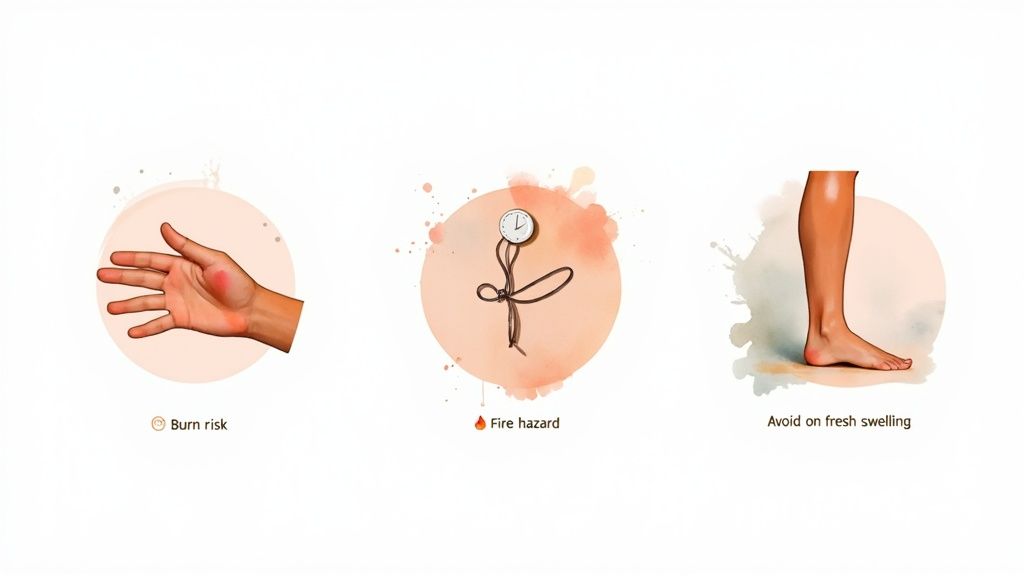
Most injuries happen in common-sense scenarios, like accidentally falling asleep while using a heat pad. When you’re asleep, you lose the ability to tell if the pad is getting too hot, which can lead to serious skin damage.
The Reality of Heat-Related Injuries
It’s easy to underestimate the power of a simple heating pad, but the data shows why caution is so important. Over the years, improper use of heating products has led to a noticeable increase in burn injuries, turning a helpful tool into a hazard.
In fact, the number of annual burns from electric heating pads jumped by 33.9% between 1995 and 2008. The severity is also a real concern. Some studies found that up to 91% of injuries from microwavable wheat bags were serious enough to require surgery. These aren't just minor incidents; they're significant contact burns that happen when people fall asleep with a pad or crank the temperature up too high. If you want to dig into the data, this integrative review on burns from body heating devices offers a detailed look.
Beyond burns, there are a couple of other risks to keep in mind—both of which are easy to avoid.
- Fire Hazards from Electric Pads: An older or damaged electric heat pad can be a fire risk. Frayed cords or faulty internal wiring are the usual culprits, so always give your device a quick once-over before plugging it in.
- Worsening Inflammation: Never apply heat to a fresh, swollen injury, like an ankle you just sprained. Heat boosts blood flow, which sounds good, but on a new injury, it can actually increase swelling and slow down the initial healing process.
The most common heat pad injuries aren't caused by faulty products, but by misuse. Simple, consistent habits are your best defense against accidents.
Simple Steps for Safe Heat Therapy
The good news? Preventing these issues is incredibly simple. A few easy habits can make all the difference, ensuring every heat therapy session is safe, soothing, and does exactly what it's supposed to.
1. Always Create a Barrier Never put a heat pad directly on your bare skin. Always place a towel or a layer of clothing between the pad and your body. This little step helps distribute the heat more evenly and gives you a crucial layer of protection against burns.
2. Stick to a Timer Keep your heat therapy sessions to 15-20 minutes at a time. This is the sweet spot—long enough to get the therapeutic benefits without overheating your skin. Just set a quick alarm on your phone to remind you when it's time to take a break.
3. Never Use a Heat Pad While Sleeping This is the golden rule of heat pad safety. When you’re asleep, your body can’t properly sense and react to rising temperatures, which dramatically increases the risk of a severe burn. Always turn off and unplug your heat pad before you doze off.
4. Inspect Your Equipment Before each use, give your heat pad a quick check. For electric pads, look for any cracks or frays in the cord. For microwavable ones, check for tears, thin spots, or leaks. If you spot any damage, it's time for a replacement.
By following these simple guidelines, you can confidently use heat therapy to ease pain and feel better, steering clear of the risks and focusing only on the relief.
When You Need to Be Extra Cautious with Heat Therapy
The soothing warmth of a heat pad can feel like a universal comfort, but it’s not the right tool for every person or every situation. Think of it like a powerful medicine—incredibly effective when used correctly, but potentially harmful if applied under the wrong circumstances. The real answer to "are heat pads safe?" all comes down to context.
For most people, simply following the standard safety guidelines is all it takes. However, some health conditions dramatically increase the risks, and for those individuals, talking to a doctor before using any heating device isn't just a good idea—it's essential for your well-being.
The Critical Warning for Diabetic Neuropathy
One of the most serious warnings is for anyone with diabetic neuropathy. This condition causes nerve damage, often in the feet and hands, which severely diminishes the ability to feel pain, pressure, or temperature. Someone with neuropathy might have no idea a heat pad is dangerously hot until a severe burn has already happened. Their body's natural alarm system—the sensation of pain—has been silenced.
The consequences can be absolutely devastating. A study from Tri-Service General Hospital in Taiwan looked at 16 patients admitted with severe burns from heat applications, and the findings were stark. Every single patient (100%) had diabetic neuropathy. The medical care they needed was intense: 87.5% required debridement (the removal of damaged tissue), half needed multiple operations, and a shocking 19% ultimately faced amputations.
For individuals with diabetic neuropathy, a simple heat pad can become an unseen danger. The impaired sensation means the body cannot warn you of developing burns, leading to deep tissue damage before you even notice something is wrong.
When Heat Is Not the Answer
Beyond diabetic neuropathy, several other groups need to be extremely careful or avoid heat pads altogether.
- Pregnancy: Applying heat directly to the abdomen or lower back during pregnancy is a no-go. Raising your core body temperature could pose risks to the developing fetus. It’s always best to speak with your doctor about safe ways to manage aches and pains. For a deeper dive, check out our guide on using heating pads safely during pregnancy.
- Infants and Young Children: A baby’s skin is far more sensitive and delicate than an adult's. They can't regulate their body temperature as well and, most importantly, can't tell you if something is too hot. Never use a standard heat pad on an infant.
- Individuals with Circulatory Issues: Conditions like peripheral vascular disease or deep vein thrombosis impact blood flow. Since heat therapy works by increasing circulation, applying it to areas with an existing circulatory problem can sometimes worsen the issue or mask important symptoms.
- Open Wounds or Damaged Skin: You should never apply heat directly over an open wound, stitches, or an area of broken skin. This can increase the risk of infection and cause further tissue damage. Wait until your skin is fully healed before reaching for that heat pad.
The Power of Massage as a Safe Alternative
If you fall into one of these high-risk categories, it doesn't mean you have to just live with the discomfort. Massage therapy is an excellent and safe alternative that provides many of the same benefits as heat. It also boosts circulation, relaxes tight muscles, and releases tension, but it does so without any risk of burns.
A gentle massage can stimulate blood flow and ease muscle spasms in a completely safe way. It's a powerful hands-on approach that allows you or a therapist to address pain points directly, providing relief when heat pads are off the table.
Your Simple Guide to Safe Heat Pad Application
Now that we’ve covered the potential risks, let's turn that knowledge into a simple, practical routine. Think of this as your go-to checklist for using a heat pad safely, every single time. Making these steps a habit is the key to turning heat therapy into a reliable, worry-free part of your wellness plan.
These guidelines are easy to remember and even easier to follow, ensuring you get all the soothing benefits without any of the risks.
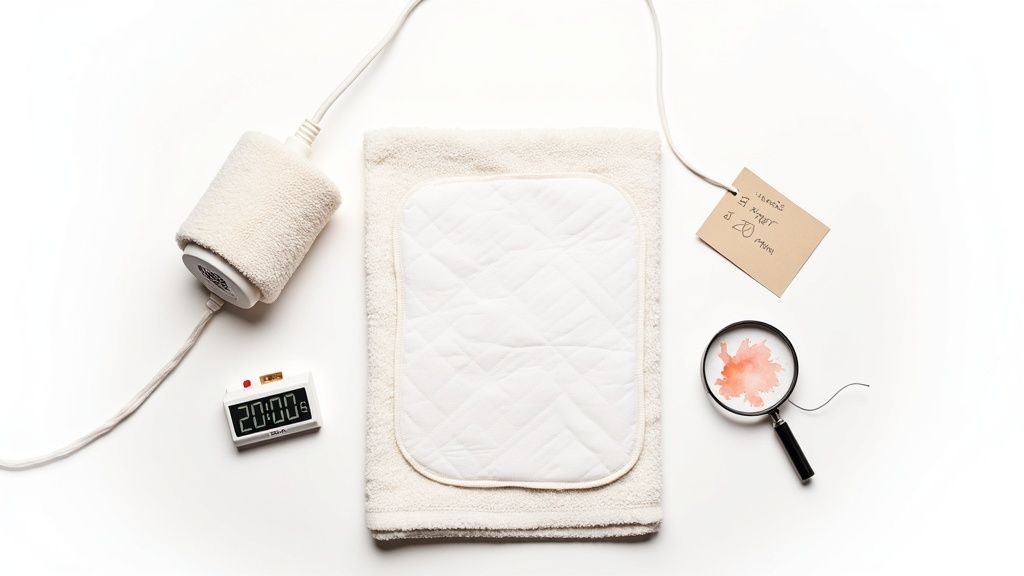
Your Six-Step Safety Checklist
Run through this simple process before and during every heat therapy session. It’s a quick mental scan that quickly becomes second nature, protecting you from common mistakes.
-
Always Inspect Your Pad First: Before plugging it in or putting it in the microwave, give your pad a quick once-over. For electric models, check the cord for any frays or cracks. With microwavable pads, look for leaks, tears, or thin spots. If you spot any damage, it’s time to replace it.
-
Create a Protective Barrier: This is the most important, non-negotiable step. Never apply a heat pad directly to your bare skin. Always place a soft, dry towel or a layer of clothing between the pad and your body. Think of it like using an oven mitt—that simple layer makes all the difference in preventing burns.
-
Stick to a 20-Minute Timer: The sweet spot for effective heat therapy is between 15 and 30 minutes. Just set an alarm on your phone to remind you when your time is up. This prevents you from overexposing your skin to heat, which can cause low-temperature burns even if it feels comfortable at the time.
Overuse doesn't provide extra benefits and only increases your risk. A short, focused session is far safer and more effective for relaxing muscles and boosting circulation.
Sticking to this time limit gives your muscles plenty of time to absorb the warmth without overwhelming your skin's delicate tissues.
Monitor and Adjust for Comfort
Finally, remember that using a heat pad safely is an active process. You need to stay aware of how your body is responding throughout the entire session.
-
Start on the Lowest Setting: If you're using an electric pad, always begin with the lowest heat setting. You can gradually increase it if needed, but starting low gives your skin time to adjust and helps you find that "just right" temperature without going overboard.
-
Stay Awake and Alert: This is a big one: never, ever fall asleep while using a heat pad. Your body's ability to sense excessive heat drops significantly when you're asleep, which is how most serious burns happen. If you start feeling drowsy, turn the pad off right away.
-
Monitor Your Skin: Check the area during and after your session for any signs of excessive redness or irritation. A little pinkness is normal, but bright red or blotchy skin is a clear sign that the heat was too high or applied for too long.
Common Questions About Heat Pad Safety
Even when you know the basics, a few specific questions always pop up. Let's run through some of the most common ones I hear, so you can feel completely confident and get the most out of your heat therapy. Answering these real-world questions is the last step to making heat pads a safe, effective part of your wellness routine.
Can I Sleep With a Heating Pad On?
The short answer is no. You should never fall asleep with a heating pad on, and I can't stress this enough—even if it has an automatic shutoff.
When you're asleep, your body simply can't tell you if the pad is getting too hot. This kind of prolonged, unsupervised contact is one of the quickest ways to get a serious thermal burn. It’s a simple rule: always turn off and unplug your heat pad before you drift off.
How Long Should I Keep a Heating Pad On?
For the best results, aim for a session that's about 15 to 20 minutes long. That's the sweet spot, giving the warmth enough time to get deep into your muscles and boost blood flow without putting your skin at risk.
Pushing past 30 minutes in a single session doesn't actually add any therapeutic benefit; it just dramatically increases your chance of getting burned. The key is to give your skin a break. Let it cool down for at least an hour before you think about going for another round.
A consistent, shorter application is far more beneficial than one long, extended session. It gives your body the therapeutic warmth it needs while respecting your skin's limits.
Is It Safe to Use a Heating Pad Every Day?
Yes, for most people, it's perfectly fine. If you're dealing with chronic pain from something like arthritis or have that nagging muscle stiffness that just won't quit, daily heat therapy can be a game-changer. The trick is to follow the safety rules every single time.
That means sticking to that 15-20 minute window, always using a protective barrier like a towel, and giving your skin a quick check for redness or irritation after each use. If you notice you're reaching for it daily, it's a good idea to chat with your doctor or physical therapist. They can help make sure you're getting to the root of the problem, not just soothing the symptoms. For an even bigger impact, think about combining daily heat therapy with professional massage therapy—it's a powerful, drug-free way to manage long-term discomfort.
Ready to experience safe, effective, and natural pain relief? The microwavable heat pads from SunnyBay are designed with your comfort and safety in mind, using clinic-grade materials trusted by professionals for over 20 years. Find the perfect solution for your aches and pains at https://sunny-bay.com.


